
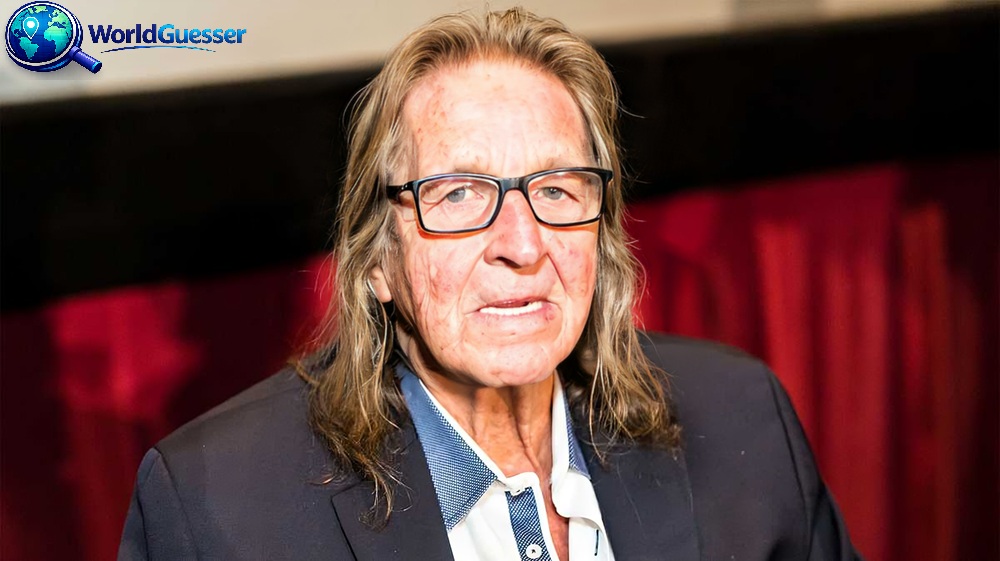
George Jung is one of the most fascinating and cautionary figures in the history of American organized crime. A working-class kid from Massachusetts who dreamed of wealth, he became the architect of a cocaine smuggling pipeline that flooded the United States with billions of dollars’ worth of drugs — and ultimately lost everything he built. His story, later immortalized in the 2001 film Blow, remains as gripping and sobering today as it was when it first unfolded on the streets of Miami and the mountain airstrips of Colombia.
Wiki / Bio Table
| Detail | Information |
|---|---|
| Full Name | George Jacob Jung |
| Nicknames | Boston George, El Americano |
| Date of Birth | August 6, 1942 |
| Place of Birth | Weymouth, Massachusetts, USA |
| Nationality | American |
| Ethnicity | Caucasian |
| Height | 5 ft 11 in (180 cm) |
| Education | Weymouth High School (graduated 1961); briefly attended University of Southern Mississippi |
| Occupation | Drug Trafficker, Smuggler (former) |
| Known For | Cocaine smuggling for the Medellín Cartel; inspiring the film Blow (2001) |
| Partner in Crime | Carlos Lehder |
| Cartel Affiliation | Medellín Cartel (Pablo Escobar) |
| Ex-Wife | Mirtha Jung |
| Daughter | Kristina Sunshine Jung |
| Sentenced | 60 years (1994), reduced to ~20 years |
| Released | 2014 |
| Death | May 5, 2021 (aged 78), Weymouth, Massachusetts |
| Cause of Death | Liver and kidney failure |
| Portrayed By | Johnny Depp (Blow, 2001) |
| Estimated Peak Earnings | Over $100 million |
Early Life: A Boy With Big Ambitions in a Small Town
George Jacob Jung was born on August 6, 1942, in Weymouth, Massachusetts, to Frederick Jung, who ran a small struggling business, and Ermine Jung. The family was working-class, and watching his father labor against financial hardship had a deep impact on the young George. He grew up determined to avoid poverty — though the path he eventually chose would lead to a very different kind of ruin.
In high school, Jung was a natural athlete and a star football player. His classmates remembered him as charismatic and likeable — a natural leader. But beneath the charm was a restlessness and an appetite for money and adventure that conventional life couldn’t satisfy. After graduating from Weymouth High School in 1961, he briefly enrolled at the University of Southern Mississippi, where he considered studying advertising, before dropping out and heading to California.
It was California in the mid-1960s — the era of hippie counterculture, free love, and experimentation — that truly shaped the direction of Jung’s life. He fell in with a crowd that embraced marijuana as part of their lifestyle, and his sharp business instincts immediately recognized the enormous profit potential of supplying it to the East Coast, where it was both scarce and in high demand.
The Marijuana Years: A Self-Made Smuggler
George Jung’s criminal career began with a simple, almost elegant insight: marijuana was cheap and plentiful in California and Mexico, and incredibly valuable in New England. He started small, having his flight attendant girlfriend carry drugs in her suitcases on commercial flights. But as his ambitions grew, so did his methods.
He moved up to using private planes — often stolen from airports on Cape Cod — and established a supply chain from Puerto Vallarta, Mexico. At his peak during this period, Jung and his network were reportedly clearing around $250,000 a month, an enormous sum in the early 1970s. The operation ran smoothly until 1974, when Jung was arrested in Chicago while attempting to offload 660 pounds of marijuana. A contact who had been arrested for heroin smuggling gave him up to the authorities in exchange for leniency.
Jung was sent to the Federal Correctional Institution in Danbury, Connecticut. His argument to the judge — that he should not be imprisoned “for crossing an imaginary line with a bunch of plants” — was as bold as it was unsuccessful. But Danbury, as it turned out, would not break him. It would transform him.
The Danbury Connection: Meeting Carlos Lehder
Prison is where many criminal careers end. For George Jung, it was where the next chapter began. At FCI Danbury, his cellmate was a young German-Colombian man named Carlos Lehder — a figure who would introduce him to a world far more dangerous and lucrative than marijuana smuggling had ever been.
Lehder explained the booming demand for cocaine in the United States and the enormous supply available through Colombian networks. In exchange, Jung shared his knowledge of aviation-based smuggling — how to move large quantities of product across borders using private aircraft, refueling points, and coordinated drop logistics. The two men were, in criminal terms, a perfect match.
After their release from Danbury in 1975, they began moving cocaine shipments from Colombia to the United States, using private planes and Caribbean refueling stops. Soon they attracted the attention of the most powerful criminal organization in the Western Hemisphere: the Medellín Cartel, led by Pablo Escobar.
The Cocaine Empire: Working for Escobar
The partnership between Jung, Lehder, and the Medellín Cartel redefined the American drug landscape. What had been a fragmented, small-scale cocaine market was transformed into an industrial operation. The cartel is estimated to have been responsible for up to 85 percent of the cocaine smuggled into the United States during its peak years — and George Jung was a key figure in making that pipeline work.
| Phase | Activity | Approximate Earnings |
|---|---|---|
| Mid-1960s | California marijuana distribution | Modest, startup phase |
| Early 1970s | Marijuana smuggling via private planes from Mexico | ~$250,000/month |
| Late 1970s | Cocaine smuggling with Lehder for Medellín Cartel | Tens of millions |
| Peak Career | Direct trafficking for Escobar’s operation | Over $100 million total |
At the height of his involvement, Jung had accumulated over $100 million, much of it sitting in Panamanian bank accounts. He lived the life one might imagine — luxury properties, sports cars, constant parties. But the golden years were brief. A series of arrests in the late 1970s and early 1980s began to chip away at his position, and his partnership with Lehder dissolved as the latter built his own independent operation on Norman’s Cay in the Bahamas.
The Downfall: Arrests, Betrayal, and Prison
Jung’s criminal career was not a straight line — it was a series of rises and falls, with each arrest followed by a return to the game. After serving time for earlier drug offenses, he attempted to rebuild, but could never recapture the scale of his Medellín Cartel days.
In 1994, after reconnecting with an old partner, Jung was arrested in Topeka, Kansas, carrying 1,754 pounds of cocaine. This time, there was no escaping the consequences. He pleaded guilty to three counts of conspiracy and was sentenced to 60 years in federal prison.
The sentence was later reduced to approximately 20 years after Jung agreed to testify against Carlos Lehder. The decision to testify was not easy — Escobar himself reportedly reached out to Jung, urging him to cooperate as a way of undermining Lehder’s credibility. Jung served time at Otisville Federal Prison, FCI Fort Dix in New Jersey, and FCI La Tuna in Texas.
He was released in 2014. Two years later, in December 2016, he was arrested again for a parole violation — reportedly stemming from a paid public appearance that had not been cleared by his parole officer — and served additional time before being fully released in mid-2017.
Personal Life and Family
Beneath the larger-than-life criminal mythology, George Jung was a man whose personal relationships were marked by the same turbulence as his criminal career.
| Relationship | Person | Notes |
|---|---|---|
| Ex-Wife | Mirtha Jung | Married during his peak years; also involved in drug lifestyle |
| Daughter | Kristina Sunshine Jung | Their strained relationship formed the emotional core of Blow |
| Later Partner | Ronda Clay Spinello Jung | Was with him during his later years and post-prison life |
His relationship with his daughter Kristina Sunshine Jung was perhaps the most poignant aspect of his story. She was born in 1978, and his long periods of incarceration meant he was largely absent from her life. The film Blow devoted significant attention to this estrangement, giving Jung’s story a human dimension that went beyond the glamour and criminality.
Kristina has been open in interviews about the complicated feelings that come with being the daughter of a notorious drug trafficker — love and grief mixed with resentment and loss.
Blow (2001): Life Becomes Legend
In 2001, director Ted Demme brought George Jung’s story to the big screen with Blow, starring Johnny Depp as Jung and Penélope Cruz as Mirtha. The film followed Jung’s arc from Massachusetts teenager to Medellín Cartel insider to convicted felon, capturing both the seductive allure of his lifestyle and its devastating consequences.
The film was based on Bruce Porter’s 1993 book of the same name. While it took dramatic liberties — as biopics tend to do — it was largely faithful to the emotional truth of Jung’s story and introduced him to a global audience that had never heard his name. The final scene, in which an aging Jung imagines his daughter visiting him, remains one of the more quietly devastating moments in crime cinema.
Jung himself was reportedly pleased with the film, though he noted that Depp’s portrayal made him seem more sympathetic than he may have deserved.
Later Years and Death
After his final release from custody in 2017, Jung lived a relatively quiet life. He had lost the fortune — estimates put his final net worth at around $50,000, a number that says everything about where the drug trade ultimately leads. He made occasional public appearances, gave speeches, and collaborated on a fictional novel titled Heavy, co-written with T. Rafael Cimino.
His health deteriorated in his final years. George Jung died on May 5, 2021, at his home in Weymouth, Massachusetts — the same town where he was born 78 years earlier. The cause of death was liver and kidney failure. He had been receiving hospice care in his final weeks.
His death drew tributes from fans of Blow and students of true crime history alike. For many, he remained a tragic figure — a man of genuine intelligence and charisma who channeled those gifts into destruction.
Legacy: A Cautionary Tale That Still Fascinates
The legacy of George Jung is double-edged. On one hand, he was instrumental in flooding American cities with cocaine during the most dangerous period of the drug epidemic, contributing to addiction, violence, and death on a massive scale. On the other hand, his story has been told and retold precisely because it touches something universal — the pursuit of wealth, the seduction of power, and the price of living outside the law.
He did not die a wealthy man. He did not die reconciled with his daughter in the way he had hoped. He died in the same Massachusetts town where he grew up, having spent the better part of three decades behind bars and having given away or lost everything he once had.
His is not a story of triumph. But it is a story that, for better or worse, refuses to be forgotten.