
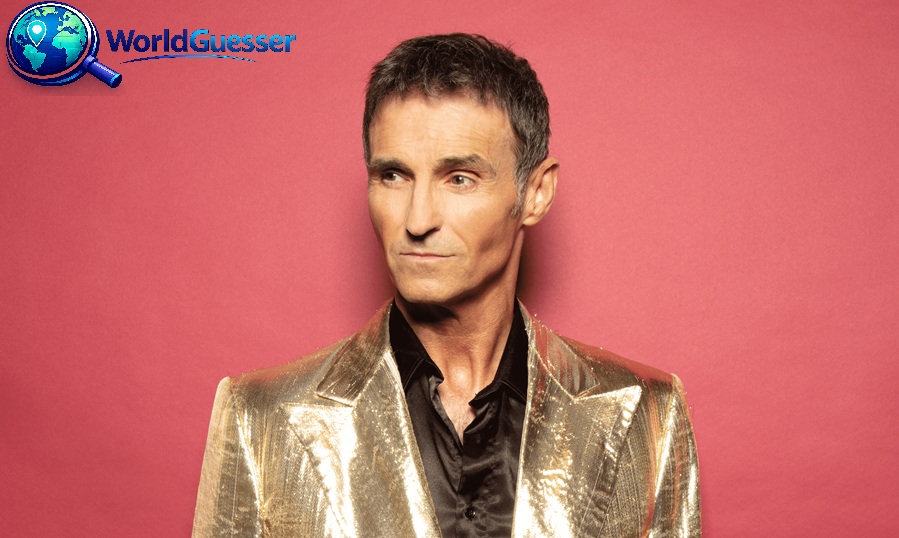
There are voices that define a decade — voices so specific and so perfectly suited to their moment that when you hear them, you are immediately transported back to wherever you were when that music first found you. Marti Pellow has one of those voices. Rich, soulful, and capable of conveying genuine emotion without tipping into melodrama, it turned Wet Wet Wet into one of the most commercially successful British pop acts of the late 1980s and 1990s — and sustained a solo career that has outlasted the band, the era, and every attempt by critics to reduce him to a nostalgia act.
For readers looking for a quick answer — Marti Pellow is a Scottish singer, actor, and songwriter born Mark McLachlan on March 23, 1965, in Clydebank, Scotland. He is best known as the lead singer of Wet Wet Wet — the Glasgow band whose cover of “Love Is All Around” spent 15 weeks at number one on the UK charts in 1994, becoming one of the best-selling singles in British chart history. He has also built a substantial solo career, appeared in major West End and Broadway productions, and has spoken openly about his recovery from heroin addiction — a journey that adds considerable depth to a public story that goes well beyond the hits.
Quick Facts
| Field | Details |
|---|---|
| Full Name | Mark McLachlan |
| Stage Name | Marti Pellow |
| Born | March 23, 1965 |
| Birthplace | Clydebank, Scotland |
| Nationality | Scottish / British |
| Occupation | Singer, Actor, Songwriter |
| Known For | Lead vocalist — Wet Wet Wet; “Love Is All Around” |
| Genre | Pop, Soul, Blue-Eyed Soul, R&B |
| Spouse | Eileen Catterson (m. 1998) |
| Active Years | 1982 – Present |
| Record Label | Precious Organisation / Mercury / Phonogram (Wet Wet Wet); Solo — various |
Early Life: Clydebank, Scotland
Marti Pellow was born Mark McLachlan on March 23, 1965, in Clydebank — a town on the outskirts of Glasgow with a working-class identity shaped by its shipbuilding heritage and the particular resilience that comes from communities built around hard physical labour.
Growing up in Clydebank in the late 1960s and 1970s meant growing up in a Scotland that was simultaneously proud and struggling — a place where music was one of the most accessible forms of escape and expression available. The radio, the record player, the occasional live performance — these were the cultural entry points that shaped a generation of Scottish musicians who would go on to have outsized impact on British pop.
Mark McLachlan was one of those children who simply had a voice. Not just technically — though the technical quality was clearly there from early — but emotionally. He could make people feel something when he sang, and that particular gift is rarer than pure technical proficiency by a significant margin.
His musical influences drew from the soul and R&B tradition — artists like Al Green, Smokey Robinson, and the Motown catalogue that had crossed the Atlantic and embedded itself in British working-class culture. The blue-eyed soul sound that would eventually define Wet Wet Wet was not a calculated commercial decision. It was the natural expression of what Marti Pellow genuinely loved about music from the time he was a teenager in Clydebank.
Formation of Wet Wet Wet
Wet Wet Wet came together in Glasgow in the early 1980s — a group of young men from similar backgrounds who shared a love of soul music and a collective ambition that exceeded anything their circumstances immediately suggested was realistic.
The band that would eventually sign a record deal and become household names across the UK formed around a core lineup that remained remarkably stable throughout their commercial peak.
| Wet Wet Wet — Original Lineup | Details |
|---|---|
| Marti Pellow (Mark McLachlan) | Lead vocals |
| Graeme Clark | Bass guitar |
| Tommy Cunningham | Drums |
| Clive Mitchell | Keyboards (early member) |
| Neil Mitchell | Keyboards (replaced Clive) |
The band name — Wet Wet Wet — came from a lyric in the Scritti Politti song “Getting, Having and Holding.” It was an unusual choice that reflected a certain irreverence and confidence — the kind of name that either works completely or becomes a millstone, and in their case worked completely because the music behind it was strong enough to carry any name.
They developed their sound playing the Glasgow live circuit — building a following through sheer performance quality before the record industry came to them. Their reputation was built on live shows rather than studio polish, which gave the early Wet Wet Wet a raw energy that the recordings eventually captured but never fully replicated.
In 1985, they were signed to Precious Organisation — a Scottish independent label — and subsequently to Phonogram for major label distribution. The machinery of the mainstream music industry was now behind them. What followed was one of the more impressive commercial runs in British pop history.
Rise to Fame: The Blue-Eyed Soul Sound
Wet Wet Wet’s commercial breakthrough arrived with their debut single “Wishing I Was Lucky” in 1987 — a track that announced them to the UK charts with a combination of Marti’s soulful vocal, a hook that lodged itself immediately in the memory, and a production style that sat comfortably between classic soul and contemporary pop.
It reached number six on the UK Singles Chart — a remarkable debut that confirmed the band’s commercial potential and established them as one of the most exciting new acts in British pop.
What followed consolidated that position rapidly.
| Wet Wet Wet — Early Hit Singles | Year | UK Chart Position |
|---|---|---|
| Wishing I Was Lucky | 1987 | #6 |
| Sweet Little Mystery | 1987 | #5 |
| Goodnight Girl | 1992 | #1 |
| More Than Love | 1992 | #19 |
| Love Is All Around | 1994 | #1 (15 weeks) |
| If I Never See You Again | 1997 | #3 |
Their debut album “Popped In Souled Out” (1987) reached number one on the UK Albums Chart — an extraordinary achievement for a debut record and confirmation that the live reputation they had built in Glasgow translated completely to the recorded format.
What distinguished Wet Wet Wet from the crowded field of late-1980s British pop was precisely the soulfulness that Marti’s voice brought to material that could have been ordinary in lesser hands. He sang pop songs with the emotional investment of a soul singer — and that combination of commercial accessibility and genuine emotional depth is what built a fanbase that remained loyal through everything that followed.
Love Is All Around: The Song That Stopped Britain
In the summer of 1994, Wet Wet Wet recorded a cover of “Love Is All Around” — originally written and recorded by Reg Presley of The Troggs in 1967 — for the soundtrack of Richard Curtis’s romantic comedy Four Weddings and a Funeral.
What happened next was one of the most remarkable chart runs in British pop history.
The song entered the UK Singles Chart and simply refused to leave the top position. Week after week, it held the number one spot with a commercial dominance that became the cultural conversation of that summer. It stayed at number one for 15 consecutive weeks — eventually becoming one of the best-selling singles in UK chart history.
| “Love Is All Around” — Chart Facts | Details |
|---|---|
| Original | Written by Reg Presley; recorded by The Troggs (1967) |
| Film | Four Weddings and a Funeral (1994) |
| UK Chart Entry | May 1994 |
| Weeks at Number One | 15 consecutive weeks |
| Copies Sold (UK) | Over 1.8 million |
| Why They Pulled It | Band voluntarily withdrew it to prevent breaking record |
| Record It Could Have Broken | Bryan Adams’ “Everything I Do” (16 weeks at #1) |
The detail that most people remember — and that says something genuine about the band’s character — is that Wet Wet Wet voluntarily withdrew the single from sale before it could break the record for the longest-running number one in UK chart history, which was held by Bryan Adams’ “Everything I Do (I Do It For You).”
Their reasoning was essentially that they didn’t want to be known primarily as record-breakers rather than musicians. It was an unusual decision that cost them a place in the record books but gained them considerable respect — and arguably burnished their reputation more than breaking the record would have.
The song’s association with Four Weddings and a Funeral gave it a cultural longevity that extends well beyond its chart run. It appears in film compilations, wedding playlists, and nostalgic retrospectives to this day — a piece of music so embedded in the cultural fabric of mid-1990s Britain that it has effectively become permanent.
Wet Wet Wet Discography: The Full Picture
| Album | Year | UK Chart Position | Notable Singles |
|---|---|---|---|
| Popped In Souled Out | 1987 | #1 | Wishing I Was Lucky, Sweet Little Mystery |
| The Memphis Sessions | 1988 | #3 | Goodnight Girl (later re-released) |
| High on the Happy Side | 1992 | #1 | Goodnight Girl, More Than Love |
| Hold Back the River | 1994 | #2 | Love Is All Around, She’s All on My Mind |
| 10 | 1997 | #7 | If I Never See You Again |
| Keep On | 2007 | — | Reunion album |
The consistency across their discography is striking — multiple number one albums, consistent Top 10 singles, and a commercial presence that lasted a full decade from their debut to their first breakup. Very few British pop acts maintain that level of chart relevance across ten years, and the ones that do tend to have something genuine at their core. For Wet Wet Wet, that something was always Marti’s voice.
Personal Struggles: The Addiction Years
Marti Pellow has spoken about his battle with heroin addiction with a directness and specificity that sets him apart from the carefully managed confessions that characterise most celebrity discussions of substance abuse. He has not used his recovery story as a brand. He has simply told the truth about what happened — and the truth is complicated and human in ways that deserve proper acknowledgment.
His addiction developed during the period of Wet Wet Wet’s greatest commercial success — the early-to-mid 1990s, the years when “Love Is All Around” was everywhere and the band’s profile was at its absolute peak. The paradox of addiction and success coexisting is not unusual in the music industry, but it is one that is rarely discussed as honestly as Marti has discussed it.
Heroin addiction at any level is destructive. At the level Marti experienced it — during a period of intense public scrutiny, relentless touring and recording pressure, and the particular vulnerability that comes with being the most visible face of a massively successful band — it was devastating in ways that affected not just his own life but the people around him.
He has spoken about the impact on his relationships, his creative output, and his sense of self. He has not dramatised it or used it to generate sympathy. He has described it as a period of genuine darkness that required genuine work to come out of — and that honesty, without performance or packaging, is considerably more valuable than the typical celebrity recovery narrative.
His sobriety represents one of the most significant achievements of his adult life — arguably more significant, in human terms, than any chart position or sold-out tour.
Wet Wet Wet: Breakup and Reunion
The band’s first breakup came in 1997 — following the release of their fifth studio album “10” and the single “If I Never See You Again.” The split was not dramatic in the public way that some band breakups are — it was more a gradual dissolution as the pressures of a decade together, combined with Marti’s personal struggles and the changing landscape of British pop, made continuation feel less sustainable than separation.
Marti went on to pursue his solo career. The other members stepped back from the spotlight with varying degrees of activity.
In 2004, the band reformed — reuniting for touring and recording that confirmed both the endurance of their fanbase and the genuine musical chemistry that had always existed between them. The reformation was received warmly by audiences who had never stopped loving the music.
| Wet Wet Wet Timeline | Details |
|---|---|
| Formed | 1982 — Glasgow |
| First Record Deal | 1985 — Precious Organisation |
| Commercial Peak | 1987–1994 |
| First Breakup | 1997 |
| Reformation | 2004 |
| Continued Activity | Touring and occasional recording post-reunion |
| Current Status | Band continues in various configurations |
The band’s history since the reformation has been characterised by periodic activity — tours, anniversary performances, and the kind of ongoing presence that reflects a genuine legacy rather than a calculated nostalgia exercise.
Solo Career: Marti Pellow Beyond Wet Wet Wet
When Marti Pellow launched his solo career in earnest with the album “Smile” in 2001, there were genuine questions about whether a voice so associated with a specific band could establish an independent identity in the market.
The answer turned out to be yes — clearly and definitively.
“Smile” reached number three on the UK Albums Chart — a remarkable debut solo performance that confirmed his fanbase’s loyalty extended to his individual work rather than just the Wet Wet Wet brand. The album’s combination of polished pop production and Marti’s consistently strong vocal performances gave it a commercial accessibility that translated directly to chart success.
| Solo Discography | Year | UK Chart Position |
|---|---|---|
| Smile | 2001 | #3 |
| Between the Covers | 2003 | #5 |
| Stay With Me | 2006 | Top 20 |
| Mysterious | 2010 | Released |
| The Fashion House | 2016 | Released |
| After the Rain | 2020 | Released |
What the solo career demonstrated was something that longtime fans already knew — Marti Pellow’s voice is the kind of instrument that works regardless of the material around it. He has covered classic songs, written originals, worked across different production styles, and maintained a consistent quality that reflects genuine artistic investment rather than commercial calculation.
Theatre and Musical Career
One of the more unexpected and genuinely impressive chapters of Marti Pellow’s career has been his transition into musical theatre — a move that surprised some observers but which, in retrospect, made complete sense.
His voice — powerful, technically accomplished, and deeply expressive — is exactly what demanding stage roles require. Musical theatre at the West End level is vocally rigorous in ways that pop performance rarely matches, and Marti’s background in soul music gave him the emotional range to inhabit complex characters while delivering demanding vocal performances eight times a week.
| Theatre Career Highlights | Details |
|---|---|
| Jekyll & Hyde | West End production; title role |
| Blood Brothers | Willy Russell’s classic; critically acclaimed run |
| Chitty Chitty Bang Bang | Major West End production |
| Various Touring Productions | Consistent theatre work across UK |
His performance in “Blood Brothers” — Willy Russell’s emotionally devastating musical about class, fate, and family — was particularly well received. The role of Mickey demands genuine dramatic ability alongside strong vocals, and Marti brought both to a production that already had a formidable legacy to live up to.
The theatre work has also given his career a dimension that pure pop success rarely provides — a connection to a different audience, a different creative discipline, and a different kind of professional respect that complements rather than replaces his pop legacy.
Personal Life: Eileen and the Quieter Chapter
Marti Pellow married Eileen Catterson in 1998 — a relationship that has provided the stability and grounded personal life that his earlier years so conspicuously lacked.
Eileen has maintained a very low public profile throughout their marriage — a choice that Marti has clearly respected and supported. She is not a figure who appears at industry events or generates media coverage of her own, and that privacy has served them both well.
Their marriage has lasted through the most difficult chapters of Marti’s public life — the post-addiction recovery years, the career transitions, the inevitable fluctuations of a long career in an unforgiving industry. That durability speaks to something real at the foundation of the relationship.
Marti has spoken about Eileen with genuine warmth in interviews — crediting her with being a consistent and stabilising presence through periods of significant personal difficulty. The recovery from heroin addiction is not something anyone does alone, and the support of a stable personal life clearly played a meaningful role in Marti’s ability to build the second chapter of his career on solid ground.
Marti Pellow Today
As of 2025, Marti Pellow remains genuinely active — touring, recording, and performing with the energy and vocal quality of someone who has maintained their instrument with real care over four decades.
He continues to tour the UK extensively — playing to audiences that include both the original Wet Wet Wet fanbase that discovered him in the late 1980s and younger audiences who have come to his music through streaming platforms and cultural rediscovery. The loyalty of his audience is remarkable — built through decades of genuine connection rather than manufactured engagement.
His social media presence is active but measured — consistent with his general approach to public life. He engages with fans authentically, shares updates about touring and recording, and maintains the kind of direct relationship with his audience that predates social media but translates well to it.
He continues to balance solo work with occasional Wet Wet Wet activity — keeping both strands of his musical identity alive without forcing a resolution between them.
Legacy and Cultural Impact
Marti Pellow’s legacy sits at the intersection of several different conversations — about British pop, about Scottish music, about blue-eyed soul, about recovery and resilience, and about what it means to have a genuinely long career in an industry that is brutally indifferent to longevity.
| Legacy Pillar | Details |
|---|---|
| Wet Wet Wet’s Chart Legacy | Multiple number one albums; one of UK’s best-selling singles |
| “Love Is All Around” | Permanent fixture of British cultural memory |
| Scottish Music | One of the defining Scottish pop figures of his generation |
| Vocal Legacy | One of British pop’s most distinctive and enduring voices |
| Recovery Story | Honest public account of addiction and recovery |
| Theatre Achievement | Successful transition to demanding West End roles |
| Solo Career Longevity | Continued relevance decades after peak commercial success |
What Marti Pellow represents in the broader story of British pop is the possibility of a genuinely long career built on genuine talent — not reinvention for reinvention’s sake, not manufactured controversy, not the desperate clinging to past glories, but the quiet, consistent work of someone who loves music and has never stopped doing it well.
Frequently Asked Questions
1. Who is Marti Pellow? Marti Pellow is a Scottish singer, actor, and songwriter born Mark McLachlan on March 23, 1965, in Clydebank, Scotland. He is best known as the lead vocalist of Wet Wet Wet and for his solo career spanning over two decades.
2. What is Marti Pellow’s real name? His real name is Mark McLachlan. He adopted the stage name Marti Pellow at the start of his professional career with Wet Wet Wet.
3. How long was “Love Is All Around” at number one? Wet Wet Wet’s cover of “Love Is All Around” spent 15 consecutive weeks at number one on the UK Singles Chart in 1994. The band voluntarily withdrew it from sale before it could break the record for the longest-running number one.
4. What film featured “Love Is All Around”? The song featured on the soundtrack of “Four Weddings and a Funeral” (1994) — the Richard Curtis romantic comedy starring Hugh Grant. The film’s enormous success significantly boosted the single’s commercial performance.
5. Did Marti Pellow have a drug addiction? Yes. Marti Pellow has spoken openly about his battle with heroin addiction during the 1990s — a period that coincided with Wet Wet Wet’s commercial peak. He has discussed his recovery with candour and without dramatisation in multiple interviews.
6. Is Marti Pellow married? Yes. Marti Pellow married Eileen Catterson in 1998. Their marriage has remained stable and private throughout the subsequent decades.
7. What has Marti Pellow done in musical theatre? He has appeared in several major productions including Jekyll & Hyde, Blood Brothers, and Chitty Chitty Bang Bang in West End and touring productions. His theatre work has been critically well received.
8. Is Marti Pellow still performing? Yes — as of 2025, Marti Pellow continues to tour and perform extensively across the UK, maintaining both his solo career and occasional Wet Wet Wet activity with consistent audience loyalty.
Conclusion: The Voice That Never Left
Some artists peak and fade. Some reinvent themselves so completely that the original version becomes unrecognisable. And some — the rarest kind — simply keep going, doing the work, trusting the voice, and building a body of work that accumulates meaning over decades rather than moments.
Marti Pellow is the third kind.
He came out of Clydebank with a voice that didn’t belong anywhere near the shipyards and made it to the top of the British charts — and stayed there, across multiple formats and multiple chapters of a career that has included commercial triumph, personal darkness, genuine recovery, theatrical achievement, and the quiet satisfaction of still being here, still performing, still connecting with audiences who have never stopped caring about the music.
The 15 weeks at number one will always be part of his story. But they are not the whole story. The whole story is considerably richer — and considerably more worth telling.