
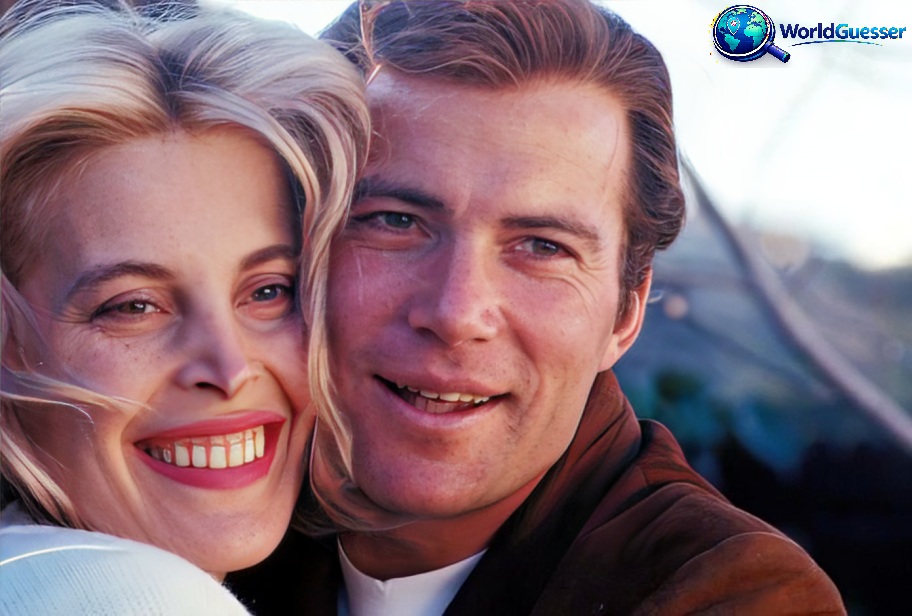
Before there was Captain Kirk, before there was Star Trek, before any of the cultural mythology that would transform William Shatner into one of the most recognisable names in American entertainment, there was Gloria Rand — a quiet, capable Canadian actress who fell in love with a struggling young performer in Toronto in the early 1950s and built a life with him that would outlast its own ending. She was there at the beginning. She raised three daughters largely on her own while her husband’s ambitions pulled him ever further from home. And when the marriage ended, she stepped away from the spotlight with the same calm dignity that had defined her presence within it.
Personal Details
| Detail | Information |
|---|---|
| Full Name | Gloria Rand (née Rabinowitz; also recorded as Rosenberg) |
| Date of Birth | June 16, 1933 |
| Place of Birth | Toronto, Ontario, Canada |
| Nationality | Canadian |
| Ethnicity | Jewish-Canadian |
| Profession | Actress (retired) |
| Years Active | Early 1950s — mid 1950s |
| Parents | Not publicly documented |
| Siblings | Not publicly documented |
| Husband | William Shatner (married August 12, 1956, Toronto; divorced March 4, 1969, California) |
| Marriage Duration | 13 years |
| Eldest Daughter | Leslie Carol Shatner (born August 31, 1958, Canada) — philanthropist; married Gordon T. Walker; children: Grant Walker, Eric Walker |
| Second Daughter | Lisabeth Shatner (born June 6, 1961) — actress and writer; appeared in Star Trek: The Original Series; writing credits include TekWar and T.J. Hooker; married Andy Clement, 2005 |
| Youngest Daughter | Melanie Shatner (born August 1, 1964) — actress; Star Trek IV: The Voyage Home; Knots Landing; Subspecies series; married actor Joel Gretsch, 1999; daughters Kaya and Willow |
| Grandchildren | Grant Walker; Eric Walker (via Leslie); Kaya Gretsch; Willow Gretsch (via Melanie) |
| Notable TV Credits | Goodyear Playhouse (1951); Encounter (1952); On Camera (1954) |
| How She Met Shatner | Cast by Shatner in a television play he wrote called Dreams (early 1950s) |
| Wedding Location | Toronto, Canada — at her parents’ home |
| Post-Divorce Life | Entirely private; did not remarry publicly |
| Death | 2017 (per IMDb records) |
A Canadian Actress in the Golden Age of Television
Gloria Rand was born on June 16, 1933, in Toronto, Ontario — a city that in the early postwar years was becoming a modest but genuine centre of Canadian arts and broadcasting. She grew up in the city during the 1940s, came of age as television was beginning to transform the entertainment landscape, and found herself drawn toward performing at precisely the moment when Canadian television was establishing its earliest identity.
Her acting career was brief but real. She appeared in Goodyear Playhouse in 1951, Encounter in 1952, and On Camera in 1954 — three television credits that place her squarely in the first generation of Canadian television performers, working in live broadcast productions at a time when the medium was still finding its form. These were not supporting walk-ons but genuine professional credits in a field that was actively being invented as she worked within it. She was, by the evidence of these appearances, a capable and committed actress who took her craft seriously and who, under different circumstances, might have built a substantially longer career.
That she did not is a consequence of the choice she made when she married — a choice that, in the context of the 1950s, was less unusual than it would seem today. Women who married performers in that era typically understood that one career would subordinate itself to the other, and that the domestic structure of the household would be built around the professional demands of the husband rather than the professional ambitions of the wife.
How She Met William Shatner: Cast in His Own Play
The story of how Gloria Rand met the man she would marry is one of the more pleasingly symmetrical in show business biography. William Shatner, then a young and ambitious Canadian actor still building his reputation, wrote a television drama called Dreams in the early 1950s. He cast Gloria Rand in it. She got the part, he got the girl, and what began as a professional collaboration became a romantic relationship that culminated in marriage.
Shatner recalled the origin of the relationship with characteristic candour in an interview with the Archive of American Television: “I wrote a television drama, in which I cast the girl that I subsequently married and became the mother of my three children.” The plainness of the account — a writer who cast the woman he fell in love with, a performer who fell for the man who saw something in her — captures the uncomplicated beginning of a marriage that would become considerably more complicated as the years progressed.
By the mid-1950s, both Shatner and Rand were navigating the transition from Canadian television into the broader American entertainment market. Shatner’s trajectory was accelerating; he was landing stage roles of increasing prestige, moving between Toronto, New York, and eventually Hollywood. Gloria moved with him, and on August 12, 1956, they married in Toronto at her parents’ home — a simple ceremony that reflected the modest circumstances of two young performers at the beginning of their professional lives.
Marriage, Motherhood, and the Years of Absence
The thirteen years of the Shatner-Rand marriage divide cleanly into two halves: the years before Star Trek and the years during it. The first half was the life that the wedding at her parents’ house had implied — two Canadian performers building a family in the early years of a career that had not yet arrived at its destination. Their eldest daughter Leslie was born in Canada on August 31, 1958. Lisabeth followed on June 6, 1961. Melanie arrived on August 1, 1964.
Three daughters in six years. Gloria managed the household, raised the children, and provided the domestic stability that Shatner’s professional life required and increasingly took for granted. She was, in the fullest sense of the word, the person who kept everything running while her husband pursued the career that both of them understood was his primary obligation.
Shatner himself has been honest — more honest than most men of his generation were willing to be — about what the marriage cost Gloria and what his own conduct cost them both. In his memoir Up Till Now, he wrote that he resented Gloria because he was working so hard to support his family while getting so little joy from the marriage, and that she had good reason to resent him in return. He described the marriage as “lopsided” — a word that captures both the structural inequality of their domestic arrangement and the emotional imbalance that grew from it over time.
The arrival of Star Trek in 1966 completed the process that his professional ambitions had begun. As Captain Kirk, Shatner became famous in a way that neither of them could have anticipated when they married in Toronto a decade earlier. The set of the show brought new relationships, new pressures, and the specific temptations of sudden celebrity. He left Rand during the filming of Star Trek’s final season. The divorce was finalised on March 4, 1969, in California — thirteen years after the wedding at her parents’ home, and a world away from it.
Three Daughters: Gloria’s Greatest Legacy
Whatever the marriage cost Gloria Rand personally, it produced three daughters who have lived lives of genuine accomplishment and who have spoken consistently about the warmth and stability their mother provided during the years when their father’s absences were most pronounced.
Leslie Carol Shatner, the eldest, was born in 1958 in Canada and grew up through her father’s Star Trek years as the oldest of three sisters navigating the particular complexity of having a famous parent while being raised primarily by the other one. She married Gordon T. Walker and has two sons, Grant and Eric. She has been involved in philanthropic work and has maintained a private life that reflects the discretion her mother modelled throughout her own post-divorce years.
Lisabeth Shatner, born June 6, 1961, followed both parents into the entertainment world — appearing in Star Trek: The Original Series and accumulating writing credits on TekWar and T.J. Hooker. She married Andy Clement in 2005. She has spoken about growing up with a famous father with the perspective of someone for whom the fame was simply the backdrop of a normal childhood: “Growing up with my dad seemed normal to me. When I was really young, I didn’t realize he worked at something different than most dads did.”
Melanie Shatner, the youngest, born August 1, 1964, has the most extensive acting career of the three — appearing in Star Trek IV: The Voyage Home, Knots Landing, the Subspecies film series, and various television productions through the 1990s. She married actor Joel Gretsch in 1999 and they have two daughters, Kaya and Willow. Melanie has offered one of the most revealing assessments of both parents’ contributions to their upbringing, telling Senior Voice Alaska of her father: “He would do whatever it took to get home to see us, even if it meant driving all night.” The tribute is to Shatner, but the context — a mother who was consistently present while the father did whatever it took to get home — says as much about Gloria as about him.
William Shatner himself acknowledged, in later interviews, the quality of what Gloria had built in his absence: “They have turned out to be three of the greatest mothers. I’m always worried about whether I’ve done a good job as a parent. They have brought their family up in the way I wish I’d brought them up. So something good must have happened.” What happened was their mother.
Life After Shatner: Chosen Privacy
After the divorce was finalised in 1969, Gloria Rand made a choice that her three daughters would largely inherit: she stepped away from public life entirely and did not step back into it. She did not pursue a return to acting. She did not remarry publicly. She did not use her former marriage to a celebrity as a platform for the kind of memoir or interview circuit that would have been available to her.
What she did instead was live — quietly, privately, and on her own terms. The details of those post-divorce decades are not publicly documented, which is itself a form of documentation: a woman who had every opportunity to seek the spotlight and chose not to, who understood that the attention directed at her was a consequence of someone else’s fame rather than her own, and who declined to trade on it.
Shatner married three more times after their divorce. His second wife was Marcy Lafferty, daughter of television producer Perry Lafferty, whom he married in 1973 and divorced in 1996 after 23 years — his longest marriage. His third wife, Nerine Kidd, drowned in their backyard swimming pool in 1999 in a tragedy that Shatner has written about with evident grief. His fourth wife, Elizabeth Martin, married him in 2001; they divorced in 2020 but have since reconciled and are reported to be living together again.
Gloria lived through all of it at a careful distance, raising daughters who were connected to their father’s famous life without being consumed by it, and building the kind of quiet, self-possessed existence that celebrity culture tends to undervalue precisely because it generates nothing to photograph.
Daughters and Grandchildren Summary
| Family Member | Relationship | Detail |
|---|---|---|
| Leslie Carol Shatner | Eldest daughter | Born August 31, 1958; philanthropist; married Gordon T. Walker; sons Grant and Eric Walker |
| Lisabeth Shatner | Second daughter | Born June 6, 1961; actress and writer; Star Trek TOS; TekWar; T.J. Hooker; married Andy Clement 2005 |
| Melanie Shatner | Youngest daughter | Born August 1, 1964; actress; Star Trek IV; Knots Landing; Subspecies; married Joel Gretsch 1999; daughters Kaya and Willow |
Legacy: There Before the Stars
Gloria Rand was present for the chapter of William Shatner’s life that preceded everything he became. She met him before the fame, married him before the recognition, raised his children while he pursued the career that would eventually make his name a cultural reference point across the world, and built a private life after the marriage ended that demonstrated a level of self-possession and dignity that the louder parts of that story tend to obscure.
IMDb records her death in 2017, which would place her final years in her early eighties — a long life lived almost entirely away from the public gaze that had briefly touched her during the years of her marriage and her acting career. Whether the privacy she chose was contentment, grief, pragmatism, or simply the recognition that the spotlight was never really hers to begin with, she kept her own counsel on the matter to the end.
The three daughters she raised are her legacy. They are, as their father acknowledged, among the greatest mothers he knows. The credit for that belongs, in the most direct way, to the woman who showed them what it looked like.
Career and Life Timeline
| Year | Milestone |
|---|---|
| 1933 | Born June 16, Toronto, Ontario, Canada |
| 1951 | Television debut — Goodyear Playhouse |
| 1952 | Encounter (television credit) |
| Early 1950s | Cast by William Shatner in his television play Dreams; relationship begins |
| 1954 | On Camera (television credit) |
| Mid-1950s | Retires from acting; follows Shatner to New York and Hollywood |
| August 12, 1956 | Marries William Shatner at her parents’ home in Toronto |
| August 31, 1958 | Eldest daughter Leslie Carol Shatner born in Canada |
| June 6, 1961 | Second daughter Lisabeth Shatner born |
| August 1, 1964 | Youngest daughter Melanie Shatner born |
| 1966 | Shatner begins filming Star Trek; leaves the marriage during final season |
| March 4, 1969 | Divorce from William Shatner finalised in California |
| 1969 onward | Entirely private life; no public remarriage; no further acting credits |
| 2017 | Died (per IMDb records) |