
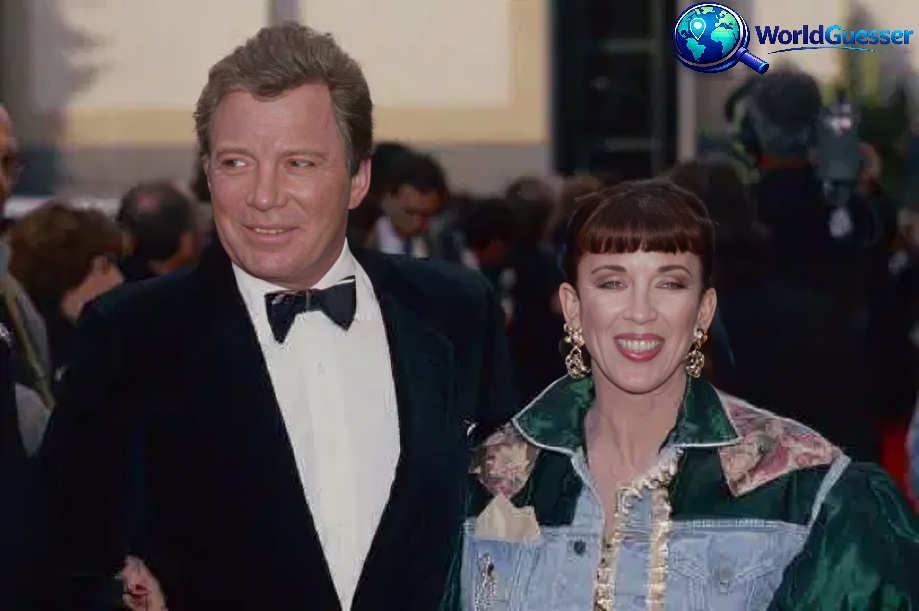
| Detail | Information |
|---|---|
| Full Name | Marcy Lafferty |
| Born | June 21, 1946, New York City, New York, USA |
| Nationality | American |
| Occupation | Actress, director, author |
| Father | Perry Lafferty — television producer and director (died August 25, 2005) |
| Brother | Steven Lafferty |
| First Marriage | Lawrence Hayes Brown (June 8, 1968 – June 1970, divorced) |
| Second Marriage | William Shatner (October 20, 1973 – December 11, 1996, divorced) |
| Third Marriage | Elliot King — hairstylist (reported; not confirmed by primary source) |
| Children | None biological; stepmother to Leslie, Lisabeth, and Melanie Shatner |
| Known For | Star Trek: The Motion Picture (1979); Kingdom of the Spiders (1977); T.J. Hooker (1982–1984) |
| Notable Stage Work | Vivien Leigh: The Last Press Conference — Tiffany Theatre, Los Angeles (2002) |
| Net Worth | Not publicly disclosed |
Who Is Marcy Lafferty
Marcy Lafferty is an American actress, director, and author born on June 21, 1946 in New York City. The daughter of prominent television producer and director Perry Lafferty — whose credits included work on CBS and the production of All in the Family — she built an acting career across television and film that ran from the late 1960s through the 1980s, appearing in productions alongside some of the most recognisable performers of her era. She is perhaps best known to wider audiences as the second wife of Star Trek actor William Shatner — a marriage that lasted from 1973 to 1996 and remains the longest of his four unions — and for her role as Chief DiFalco in Star Trek: The Motion Picture (1979), in which she appeared alongside her then-husband.
She has maintained a private life since her divorce from Shatner and has given no significant public interviews in recent decades. What is known about her is largely a product of her acting credits, her documented connection to the Shatner household, and a candid 1979 interview in which she spoke with unusual frankness about the experience of being married to a famous actor during the years when fame required careful navigation and privacy was not always guaranteed.
Hollywood Lineage: The Daughter of Perry Lafferty
Marcy Lafferty grew up in the orbit of the television industry through her father. Perry Lafferty was a respected figure in American broadcasting — a director and producer who worked extensively for CBS across several decades, with credits that included involvement in major network productions and, according to multiple sources, the production of All in the Family. He died on August 25, 2005, from prostate cancer. Marcy has a brother, Steven Lafferty.
Growing up as the daughter of a television producer in the 1950s and 1960s gave Lafferty an understanding of the industry’s mechanics before she entered it professionally. She knew what sets looked like, how productions were organised, and what the gap between the glamour of celebrity and the daily reality of working in television actually consisted of — knowledge that would prove useful both in her own career and in her subsequent marriage to one of television’s most recognisable faces.
Acting Career: From Hawaii Five-O to Star Trek
Lafferty began her acting career in 1969 with a guest appearance in the ABC drama series The New People, playing Vicky in an episode titled “Panic in the Sand.” Television work followed steadily: she appeared in Hawaii Five-O as Sue Waters, Medical Center, Barnaby Jones, Bronk, and a 1975 episode of Barbary Coast — the latter alongside James Cromwell and, notably, alongside William Shatner, reflecting the early professional overlap between the two before their careers became inseparable through marriage.
Her film credits began with Paper Man (1971), a television thriller in which she appeared alongside Dean Stockwell and Jason Wingreen. She appeared with Shatner in the low-budget science fiction horror film Kingdom of the Spiders (1977), playing a character caught in a small Arizona town infested with tarantulas — a production that has since achieved cult status among B-movie enthusiasts. The same year she appeared in Want a Ride, Little Girl? (also released as Impulse and I Love to Kill), a thriller in which Shatner played a psychopathic predator.
The most significant screen credit of her career came in 1979: she was cast as Chief DiFalco — a helm officer aboard the USS Enterprise — in Star Trek: The Motion Picture, the franchise’s return to the screen after a decade’s absence. The film was one of the most anticipated releases of that year and ultimately one of the highest-grossing films of 1979. That she appeared in the film as her husband was its star was a reflection of both their professional overlap and the casting culture of the period; it also placed her, however briefly, at the centre of a franchise that would define the second half of Shatner’s career.
Key Credits
| Title | Year | Role | Type |
|---|---|---|---|
| The New People | 1969 | Vicky | TV series |
| Hawaii Five-O | 1970 | Sue Waters | TV guest |
| Paper Man | 1971 | — | TV film |
| Coffee, Tea or Me? | 1973 | — | TV film |
| Barbary Coast | 1975 | — | TV series |
| Kingdom of the Spiders | 1977 | — | Film |
| Star Trek: The Motion Picture | 1979 | Chief DiFalco | Film |
| Airplane II: The Sequel | 1982 | — | Film |
| T.J. Hooker | 1982–1984 | — | TV series (4 episodes) |
| Vivien Leigh: The Last Press Conference | 2002 | Vivien Leigh | Stage — solo show |
Meeting Shatner, the Longest Marriage, and the Horses
Marcy Lafferty met William Shatner on the set of The Andersonville Trial — a 1970 television film about the prosecution of a Confederate prison camp commandant — where she had been hired to run lines with the cast. They married on October 20, 1973, approximately three years after the meeting. Shatner was forty-two; Lafferty was twenty-seven.
At the time they married, Shatner was emerging from the financial and personal difficulties that had followed Star Trek‘s cancellation in 1969 and his subsequent divorce from Gloria Rand. Lafferty stepped into a household that included three daughters — Leslie, born 1958; Lisabeth, born 1961; and Melanie, born 1964 — from that first marriage. Shatner later wrote in his autobiography Up Till Now that his daughters had liked Lafferty immediately, and he credited her with playing a genuine role in helping raise them through their teenage years. The relationship between stepmother and stepdaughters appears, from the available record, to have been warm and substantive rather than merely civil.
The marriage coincided with the beginning of Shatner’s involvement with American Saddlebred horse breeding — the passion that would become central to his identity across the following decades. Lafferty shared it fully. The couple spent considerable time at Belle Reve Farm, a horse farm Shatner purchased in Kentucky, and a 1993 Washington Post interview captured both of them speaking about their horses with the enthusiasm of people who had found something that genuinely absorbed them. Lafferty described the horses as being like wonderful divas — comparing them to Maria Callas and Baryshnikov. Shatner spoke about being at one with a passionate horse as having the quality of an epiphany.
Their twenty-three-year marriage was the longest of Shatner’s four. Its end in 1996 — separated in 1994, the divorce finalised on December 11, 1996 — was described by Shatner in his autobiography with notable generosity toward his ex-wife: “The failure of our marriage certainly wasn’t her fault.” He had told the New York Times in 1994, mid-separation, that his personal life was “in turmoil now, renewing itself” — the kind of controlled public statement that offered acknowledgement without detail.
The 1979 Interview: What She Actually Said About Being His Wife
In 1979, Lafferty participated in a book titled Are You Anybody?: Conversations with Wives of Celebrities, in which the wives of prominent men were interviewed about the experience of being married to fame. Her contribution is one of the more candid portraits of William Shatner from a source with intimate knowledge.
She described him as largely even-tempered but capable of flying off the handle at small things. She described his anger as quick and short-lived — he would yell, she would go quiet or cry or withdraw, and the episode would end quickly. She described the specific texture of being married to someone whose work required the constant presence of attractive co-stars with the kind of directness that was unusual for a public figure in a relationship with a more famous partner, stopping well short of complaint while making clear that the situation required a particular kind of confidence to navigate.
The interview stands as one of the few primary sources in which Lafferty speaks in her own voice about her life — and it reveals a woman of considerable intelligence, self-possession, and measured candour who had thought seriously about the dynamics of the marriage she was in rather than simply inhabiting them.
After Shatner: The Vivien Leigh Project and a Private Later Life
In April 1998, Lafferty performed a one-woman show titled Vivien Leigh: The Last Press Conference at the Tiffany Theatre in Los Angeles, playing the British actress in a solo production with no other cast members. The project reflected both her theatrical ambitions and her specific research interest — she has been described in one source as the author of a book on Vivien Leigh, though the primary record does not confirm a separately published volume distinct from the stage show’s script.
Multiple sources report a third marriage, to an international hairstylist named Elliot King, after her divorce from Shatner. The details of when this marriage took place and whether it remains current are not confirmed by any primary source, and this article notes it as reported rather than verified.
Lafferty has maintained complete privacy in the years since her divorce from Shatner. She has no documented social media presence, has given no interviews, and has made no public statements on any topic. Her stepdaughter Melanie Shatner has pursued her own acting career.
A Twenty-Three-Year Partnership Honestly Accounted
The story of Marcy Lafferty is, in the main, a story about what it takes to build a functional life alongside enormous celebrity — to raise three children who are not your own, to share a passion for horses that becomes the emotional anchor of two decades, to speak with candour about the pressures of that life when asked directly, and to exit it without bitterness when the time comes. Shatner’s public acknowledgement that the failure was not her fault is one of the more honest assessments he has offered about his own marriage history, and it locates Lafferty, correctly, as someone who gave the marriage what it required. What she has done with the decades since then is, by her own consistent choice, entirely her own business.