
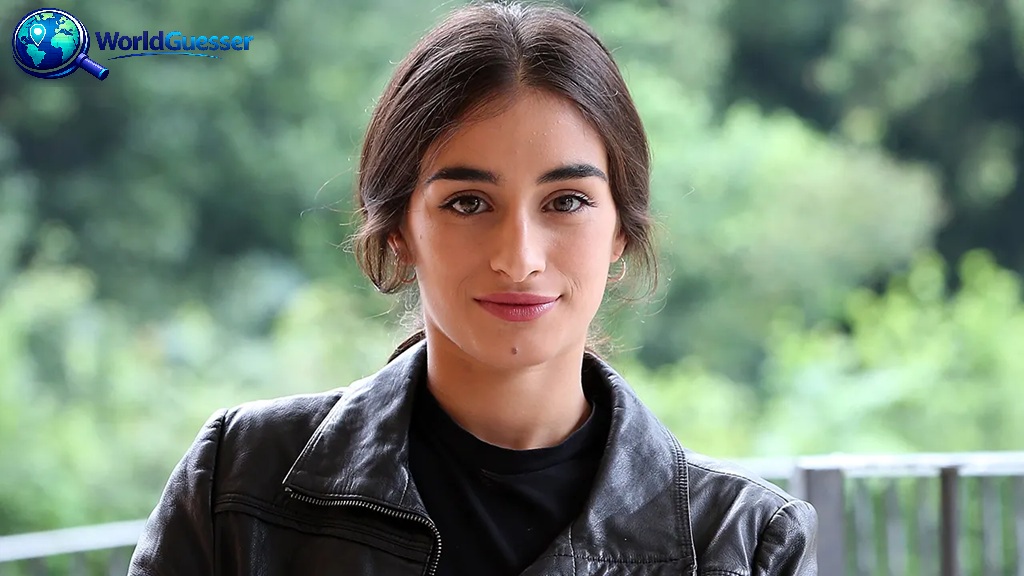
Michela De Rossi is a Roman actress whose career trajectory reads like a film pitch that no producer would greenlight for being too good to be true: a young woman from Rome, who had never left Europe and never flown alone, self-tapes an audition for the most anticipated American prestige film in years, gets called to New York City with twelve hours’ notice, reads opposite Alessandro Nivola and David Chase, steps into an elevator assuming it went nowhere — and then receives a phone call before she reaches the ground floor that changes her life entirely. The film was The Many Saints of Newark, the prequel to The Sopranos. The year was 2021. And Michela De Rossi has not stopped working since.
| Quick Facts | Details |
|---|---|
| Full Name | Michela De Rossi |
| Date of Birth | January 25, 1993 |
| Age (2025) | 32 years old |
| Birthplace | Rome, Lazio, Italy |
| Nationality | Italian |
| Ethnicity | Mixed (Roman father: Alessandro De Rossi; Sicilian mother) |
| Siblings | Stefano De Rossi (brother) |
| Education | Balletto di Roma; Academie Internationale des Arts du Spectacle; Quirino International Theatre Academy (3-year diploma, 2014) |
| Breakthrough Role | Giuseppina Moltisanti — The Many Saints of Newark (2021) |
| Other Major Works | Boys Cry (2018), I Topi / The Rats (2018–2020), Django (2023), Briganti (Netflix), While the Men Are Away (SBS, 2023) |
| Style Influences | Valentino, Alberta Ferretti, Gucci, Armani |
| Dream Role | Playing a real person in a biopic |
| Net Worth (est.) | $1 million – $2 million |
| Relationship Status | Private |
What makes her story genuinely compelling is not just the fairy tale quality of that breakthrough moment, but everything that came before it: years of theatre, a three-year drama school diploma earned through genuine discipline, 53 callbacks for a single role that ultimately went to someone else, and a quiet, stubborn refusal to believe that preparation without recognition was preparation wasted. The Hollywood call arrived because she had built something worth calling about. That distinction matters more than the anecdote.
Rome as a Foundation: Growing Up Between Music, Dance, and the Stage
Michela De Rossi was born on January 25, 1993, in Rome — a city whose relationship with performance, spectacle, and storytelling runs so deep it predates cinema by roughly two millennia. Her father, Alessandro De Rossi, is Roman; her mother is Sicilian, giving Michela the dual cultural inheritance of two of Italy’s most distinct regional identities. She grew up with a brother, Stefano De Rossi, in a household where the arts were not peripheral. Her mother’s obsessions — the musicals Hair and Grease in particular — became Michela’s earliest reference points for what performance could feel like when it worked.
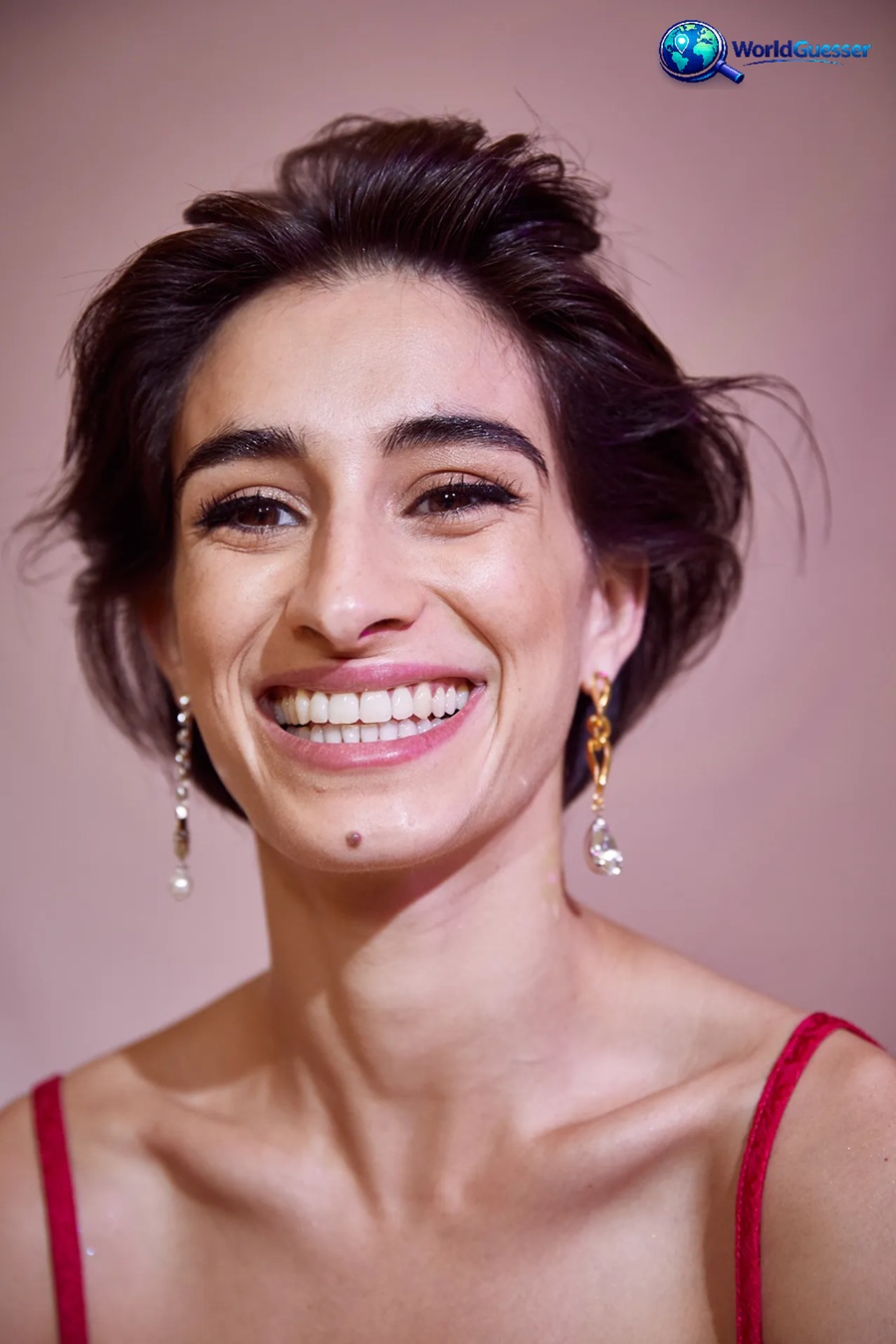
She attended the Balletto di Roma dance school as a child, where she trained in classical, contemporary, and modern dance. This was not a casual after-school activity. The Balletto di Roma is one of Italy’s most reputable dance institutions, and the training it provides is physical, rigorous, and technically demanding. For a young person developing a sense of what their body can do on a stage, it builds a foundation of spatial awareness, physical discipline, and expressiveness that purely text-based acting training cannot replicate.
She also attended the Academie Internationale des Arts du Spectacle — a French-origin institution with a Rome presence that trains performers in an international context — before making the most significant educational decision of her early life: rather than following the conventional path to university after finishing high school, she chose drama school instead.
That choice required conviction. It is not a decision that every Italian family would enthusiastically support, and Michela has been frank about this in interviews. Her parents, however, backed her. That parental trust, she has said, is among the most important things she has ever been given — the simple act of being believed in before there was evidence that belief was warranted.
The Quirino Academy and the Theatre Years: Craft Before Camera
Michela enrolled at the Quirino International Theatre Academy in Rome, one of the city’s most prestigious acting training institutions, and completed her three-year diploma in 2014. The programme trained her in the full range of classical and contemporary stage performance — text analysis, physical theatre, voice, period work, and the sustained rehearsal culture that professional theatre demands.
After graduating, her immediate instinct was not television or film. It was the stage. She has spoken about those post-graduation years with genuine warmth — a period when she simply wanted to be in theatres, performing for live audiences, doing the work that drama school had prepared her for. There was nothing strategically calculated about it. She loved theatre because theatre was where she had been trained to love what she did.
The pivot toward screen work came not through ambition but through frustration. She entered a lengthy audition process — one that stretched to an almost unbelievable 53 callbacks over six months or more — for a role she ultimately did not get. The role went to a more established actress. The rejection, understandably, hit hard.
But the casting director who had shepherded her through those 53 rounds of auditions recognised something in Michela that the outcome of that particular process did not diminish. Rather than simply moving on, that casting director told her she would find her an agent. It was an act of professional generosity that redirected Michela’s entire trajectory. With representation came auditions. With auditions came roles. With roles came everything else.
The Early Career: Building in Italy Before the World Looked
Michela’s screen career began in 2017 with a short film titled Primo, in which she played a character named Marina. It was a modest start — a short film rather than a feature, a calling card more than a credit — but it introduced her to the rhythms of working on camera after years of stage-only performance.
Her first television role came in Squadra Mobile, a Rai series about Rome’s district police force. The show gave her a professional introduction to the Italian television industry — set culture, the pace of episodic production, the discipline of hitting marks and sustaining performance across multiple shooting days — without the pressure of a lead role.
The real acceleration came in 2018 with La Terra dell’Abbastanza, released internationally as Boys Cry. The film was written and directed by brothers Damiano and Fabio D’Innocenzo — two of the most exciting voices in contemporary Italian cinema — and it premiered at the Berlin International Film Festival, earning four award nominations and significant critical attention. It was a crime drama rooted in the Roman periphery, in the lives of young men navigating poverty, loyalty, and violence in the city’s margins. Michela’s involvement in a film that broke through at Berlinale was an early signal that she was gravitating toward serious, auteur-driven work rather than commercial filler.
That same year, she began her role as Carmen in I Topi (The Rats), an Italian comedy series created by and starring Antonio Albanese — a major figure in Italian comedic performance. The show ran for two seasons, 2018 to 2020, and gave Michela her first sustained recurring television role: the chance to inhabit a character across multiple episodes and seasons, to understand how a character evolves under different pressures, and to build the kind of ensemble chemistry that long-running productions demand. Carmen was a significant role, and Michela played her with the specificity and layered quality that distinguished her from performers who simply execute line readings.
The Self-Tape That Changed Everything: Auditioning for The Sopranos Universe
In 2019 and 2020, as production preparations began for The Many Saints of Newark — David Chase’s long-gestating prequel film to The Sopranos, his landmark HBO series — Warner Bros. put out a call for an Italian actress to play a pivotal role. The character was Giuseppina Bruno, an ambitious young Italian immigrant who arrives in America with her husband, settles in Newark, New Jersey, and becomes entangled in the DiMeo crime family’s orbit through her relationship with Dickie Moltisanti.
Michela submitted a self-tape from Rome. Roughly 40 Italian actresses were subsequently called in person to Rome for meetings with the film’s Italian casting director. Michela was among them. Then she waited. Weeks passed. The audition faded in her memory, as auditions do when nothing comes of them immediately.
Then, approximately two months later, she was sitting in a theatre in Rome watching a show. It was around 10 or 11 o’clock at night. Her agent called — and she could hear, from his voice before he said a word, that something had shifted. He told her she had a flight to New York City the following morning for a chemistry read. The production wanted her to test opposite Alessandro Nivola, the film’s lead, in front of David Chase, director Alan Taylor, and the full casting and production team.
Her reaction, by her own account, was immediate panic. She had never flown out of Europe. She had never traveled internationally alone. New York City was not a place she had ever been. She told her agent she was not going. He persisted. She went.
The chemistry read lasted approximately two hours. She read with Nivola. She sat across from David Chase — the man who created one of the greatest television series in the history of the medium. She worked with Alan Taylor — a director whose credits include Game of Thrones and multiple Marvel films. And then she said goodbye, assumed she was flying home, and stepped into the elevator.
Taylor called her before she reached the lobby. The role was hers. He asked her to stay for additional rehearsals. Her flight was delayed. She boarded the next plane back to Rome with news she has described as making it the best flight she has ever taken.
Giuseppina Moltisanti: Inhabiting the Sopranos Universe
The Many Saints of Newark (2021), directed by Alan Taylor and written by David Chase and Lawrence Konner, is set in Newark, New Jersey, in the 1960s, against the backdrop of the city’s violent 1967 race riots. It follows Dickie Moltisanti (Alessandro Nivola) — the mentor and father-figure to the teenage Tony Soprano (Michael Gandolfini, son of the late James Gandolfini) — through his rise and fall within the DiMeo crime family.
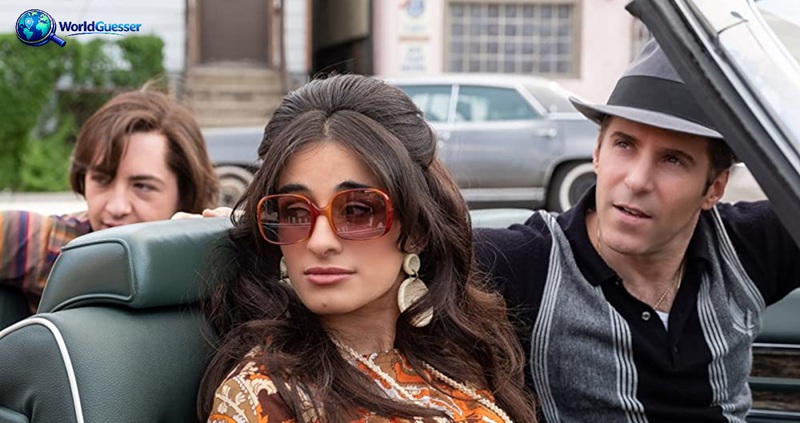
Michela plays Giuseppina Bruno, the new Italian wife of Hollywood Dick Moltisanti (Ray Liotta) — Dickie’s father. After her husband’s death, Giuseppina becomes Dickie’s mistress, a relationship that drives significant dramatic tension through the film’s second half. The character is, in many ways, a mirror of Michela’s own situation at the time of filming: an Italian woman arriving in America for the first time, navigating an unfamiliar world with limited English, relying on physicality and emotional intelligence to communicate what language cannot yet carry.
| The Many Saints of Newark — Key Facts | Details |
|---|---|
| Director | Alan Taylor |
| Written by | David Chase & Lawrence Konner |
| Released | October 1, 2021 (US); September 22, 2021 (UK) |
| Platform | Theatrical / HBO Max |
| Michela’s Character | Giuseppina Bruno / Moltisanti |
| Co-Stars | Ray Liotta, Alessandro Nivola, Michael Gandolfini, Vera Farmiga, Jon Bernthal, Leslie Odom Jr. |
| Setting | Newark, New Jersey — 1960s |
The table read for the film, which she attended on her first trip to America, became one of the defining experiences of her career. She has spoken about sitting next to Ray Liotta — her on-screen husband, the star of Goodfellas, a film she grew up watching — and the cognitive surreality of that moment. She had been watching these actors her entire life. Now she was one of them.
In preparation for the role, Michela went back to Rome and watched all six seasons of The Sopranos — 86 episodes — in approximately one month. She has described the series as “like Hamlet for television,” a statement that captures both her theatrical formation and her genuine artistic response to the material.
Going Global: Django, Briganti, and Australia
Following the release of The Many Saints of Newark, Michela’s career expanded rapidly in both scale and geography. She joined the international Western series Django — a Sky and Canal+ co-production filmed in Romania, in Transylvania, drawing on the mythology of the classic Spaghetti Western franchise — as one of its lead cast members. The production was shot across multiple countries and introduced her to the particular demands and pleasures of large-scale international co-productions: different languages on set, different national working cultures, the specific logistical complexity of period location shooting.
She also joined the cast of Briganti (released internationally as Brigands: The Quest for Gold) on Netflix — a historical Italian adventure series set in the 1860s Southern Italy during the period of Italian unification, co-starring Matilda Lutz. For Michela, the Netflix platform represented a return to the kind of high-quality European storytelling that first shaped her career, now with the global distribution reach that her work in American productions had made possible.
And then Australia called. While the Men Are Away (2023) is an SBS Australia production — a wartime dramedy set in the 1940s, written by Monica Zanetti and directed by Elissa Down, distributed internationally by Red Arrow Studios. Michela plays an Italian woman in rural Australia during World War II — a character whose immigrant experience in an unfamiliar country once again mirrors, at least thematically, her own experience of stepping into international productions as a newcomer to non-Italian filmmaking. The show earned an award nomination and introduced her to the Australian television audience.
Complete Filmography
| Year | Project | Role / Notes | Country / Platform |
|---|---|---|---|
| 2017 | Primo (short film) | Marina — debut | Italy |
| 2017 | Squadra Mobile | First TV role | Italy / Rai |
| 2018 | Boys Cry (La Terra dell’Abbastanza) | Berlinale premiere; 4 nominations | Italy |
| 2018–2020 | I Topi (The Rats) | Carmen — 2 seasons | Italy |
| 2019 | A Testa Alta – Libero Grassi | TV biopic | Italy |
| 2019 | The Prophecy of the Armadillo | Film | Italy |
| 2021 | The Many Saints of Newark | Giuseppina Moltisanti — Hollywood debut | USA / Warner Bros. / HBO Max |
| 2022 | Con chi viaggi | Lead role | Italy |
| 2022 | Io e Spotty | Lead role | Italy |
| 2022–23 | Django | Lead — international Western series | Sky / Canal+ (Italy/France) |
| 2023 | Briganti (Brigands: The Quest for Gold) | Lead — historical adventure | Netflix Italy |
| 2023 | While the Men Are Away | Lead — wartime dramedy | SBS Australia |
The Way She Thinks About Her Craft
One of the most revealing things Michela has said in interviews is her discomfort with the word “talent.” She does not dismiss it entirely — she says she believes in talent — but she resists the cultural tendency to treat it as a discovered thing, something that exists independently of work. Her framing is different: preparation and study are what make talent real. Without them, “talent” is just a label that flatters people into not doing the hard work.
That philosophy is consistent with everything her career demonstrates. She submitted a self-tape for The Many Saints of Newark not because she was famous or connected but because she had spent years becoming the kind of actress worth calling back. She watched 86 episodes of The Sopranos in a month to prepare for a role that was already hers. She came from theatre — a discipline that values precision and repetition over charisma and luck.
Her dream, she has said, is to play a real person in a biopic. Given the trajectory of her career — from Roman theatre stages to the Sopranos universe to Netflix to Australian television — it is a dream that seems considerably less distant than it might have appeared when she was sitting in a Roman theatre at 10pm, refusing to believe she had a flight to New York in the morning.
Style, Influences, and the Italian Aesthetic
Michela grew up in a city where design and visual culture are inescapable — where the clothes people wear are treated as an extension of their character and history rather than simply utility. Her style influences reflect that formation: Valentino, Alberta Ferretti, and Gucci shaped her visual sensibility growing up, and she has spoken about watching the Venice Film Festival red carpet with genuine aesthetic engagement, not just industry interest.
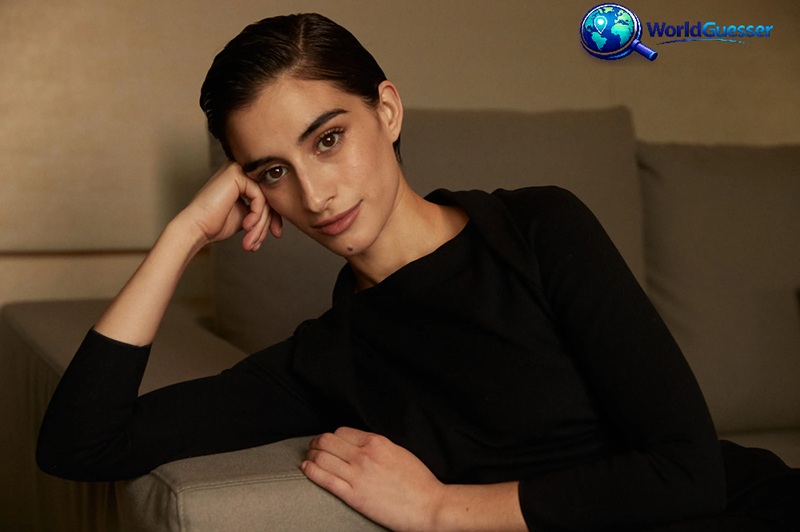
For the Many Saints of Newark premiere, she chose between Armani and Chanel before settling on a white Armani suit with pink pumps — a choice that signalled both her Italian roots and her comfort in international fashion contexts. It was the outfit of someone who understood that the premiere was itself a performance, and who dressed accordingly.
Conclusion
Michela De Rossi arrived in Hollywood via the elevator, a self-tape, and twelve hours’ notice — but she had been building toward that moment for a decade before the phone rang. Theatre, dance, drama school, 53 callbacks, a casting director who believed in her anyway, a slow accumulation of roles in serious Italian projects — all of it converged in a two-hour chemistry read in New York City that she attended half-expecting to fly home unrewarded. She did not fly home unrewarded. She flew home with a role in one of the most anticipated American films of the decade, and a career that has not slowed since. At 32 years old, with Hollywood, Australia, Netflix, and Sky all on her CV, the longer arc of what Michela De Rossi will become is still very much being written.