
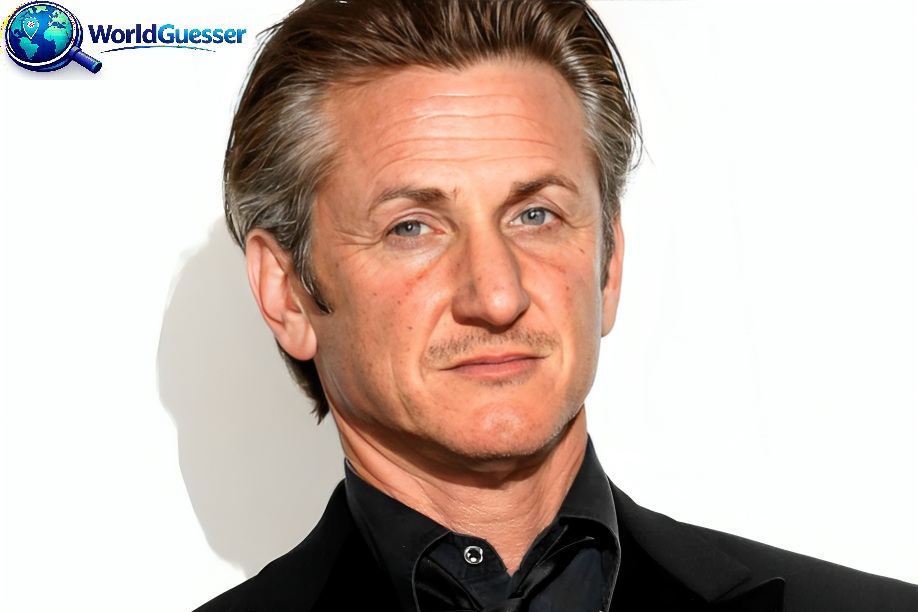
| Quick Facts | Details |
|---|---|
| Full Name | Sean Justin Penn |
| Date of Birth | August 17, 1960 |
| Birthplace | Santa Monica, California, USA |
| Raised | Malibu, California |
| Age (2026) | 65 years old |
| Height | 5 ft 8 in (173 cm) |
| Nationality | American |
| Religion | Secular (Jewish father; Catholic mother — raised non-religious) |
| Father | Leo Penn (1921–1998) — actor and television director; blacklisted during McCarthyism |
| Mother | Eileen Ryan (née Annucci) — actress; Irish and Italian descent |
| Brothers | Michael Penn (older) — musician (“No Myth”); Chris Penn (1965–2006) — actor (Reservoir Dogs, Footloose); died January 24, 2006, cardiomyopathy |
| Paternal heritage | Jewish; family from Merkinė, Lithuania |
| Education | Malibu Park Junior High; Santa Monica High School; Lee Strasberg Theatre Institute |
| Film debut | Taps (1981) — with Timothy Hutton and Tom Cruise |
| Breakthrough | Fast Times at Ridgemont High (1982) — Jeff Spicoli |
| Academy Awards | THREE WINS — Best Actor: Mystic River (2004); Best Actor: Milk (2009); Best Supporting Actor: One Battle After Another (98th Oscars, March 15, 2026) |
| Total nominations | 6 Oscar nominations — also nominated for Dead Man Walking (1996), Sweet and Lowdown (2000), I Am Sam (2002) |
| Key acting roles | Jeff Spicoli (Fast Times, 1982); Matthew Poncelet (Dead Man Walking, 1995); Jimmy Markum (Mystic River, 2003); Harvey Milk (Milk, 2008); Col. Steven J. Lockjaw (One Battle After Another, 2025) |
| As director | The Indian Runner (1991); The Crossing Guard (1995); The Pledge (2001); Into the Wild (2007); Flag Day (2021); Superpower (2023); Untitled Jamal Khashoggi Project (filming) |
| One Battle After Another | Paul Thomas Anderson; based on Pynchon’s Vineland; with DiCaprio, del Toro, Teyana Taylor; $209.7M worldwide; 6 Oscars including Best Picture |
| 98th Oscars | Won March 15, 2026 — did NOT attend; Kieran Culkin accepted; Penn reportedly in Ukraine |
| Humanitarian org | CORE Response (formerly J/P Haitian Relief Organization) — co-founded with Ann Lee |
| Ukraine | Gave one Oscar statuette to Zelenskyy; documented war in Superpower (2023); in Ukraine on night of third Oscar |
| Zelenskyy quote | “Because of you, Sean, we know what a true friend of Ukraine is” — March 16, 2026 |
| El Chapo | Met Guzmán through Kate del Castillo — Rolling Stone January 2016; del Castillo called Penn “scum” October 2025 |
| Wife 1 | Madonna (m. August 16, 1985; div. September 1989) |
| Wife 2 | Robin Wright (m. April 27, 1996; div. 2010) |
| Wife 3 | Leila George (m. July 30, 2020; div. April 22, 2022) — daughter of Vincent D’Onofrio and Greta Scacchi |
| Children | Dylan Frances Penn (b. April 13, 1991) — actress/model; Hopper Jack Penn (b. August 6, 1993) — actor |
| Notable distinction | 8th actor in history to win three performance Oscars |
| Book | Bob Honey Who Just Do Stuff (novel, 2018) |
| Net worth (2026 est.) | $70 million |
On the night of March 15, 2026, at the 98th Academy Awards ceremony in Hollywood, Kieran Culkin walked to the podium to present the award for Best Supporting Actor. When Penn’s name was read as the winner, Culkin offered the evening’s most quoted line: “Sean Penn couldn’t be here this evening — or didn’t want to, so I’ll be accepting the award on his behalf.”
The following morning, Ukrainian President Volodymyr Zelenskyy posted a photograph of himself with Sean Penn on social media. The caption read: “Because of you, Sean, we know what a true friend of Ukraine is.”
Sean Penn — born in Santa Monica, raised in Malibu, the son of a blacklisted Hollywood director, the man who married Madonna and went to jail for punching a photographer, who won his first Academy Award in 2004 and his second in 2009 — had just become the eighth actor in history to win three performance Oscars. He was in Ukraine. He was sixty-five years old. He had declined to attend the ceremony where his third Oscar was presented, just as he had declined to attend some of the previous ones. The award was delivered to him by a man who was quoting Sean Penn’s own reputation back at the room with the specific affection of someone who understood that Sean Penn being absent from his own triumph was not an anomaly but a character statement.
The story of Sean Penn is the story of one of the most consistently significant actors in American cinema — whose forty-five year career spans the stoned surfer of Fast Times at Ridgemont High, the death row inmate of Dead Man Walking, the grieving father of Mystic River, the gay rights pioneer of Milk, and the calculating military strategist of One Battle After Another — told alongside the specific story of a man who has never been able to separate his professional identity from his conviction that the world outside the set matters more than what happens on it.
Santa Monica and Malibu: The Blacklisted Father’s Son
Sean Justin Penn was born on August 17, 1960, in Santa Monica, California — the beach city whose proximity to the Hollywood machinery that shaped his family’s life was both its defining feature and, eventually, its most useful professional inheritance. He grew up in Malibu — the coastal community whose specific combination of beach culture, artistic community, and the particular informality of wealthy creative families gave him a childhood shaped by the entertainment industry’s world while remaining physically separated from its institutional centres.
His father, Leo Penn — born in 1921, the son of Jewish emigrants from Merkinė, Lithuania — was an actor and television director whose career was interrupted and permanently scarred by the specific machinery of the Hollywood blacklist. During the House Un-American Activities Committee (HUAC) investigations of the late 1940s and early 1950s, Leo Penn was identified as a Communist Party member and blacklisted — unable to work as an actor, forced to rebuild his career as a television director working under the institutional constraints that the blacklist imposed on those it targeted. He directed episodes of The Twilight Zone, Magnum P.I., and Murder She Wrote across a television career that demonstrated genuine competence while operating at a permanent remove from the possibilities that the blacklist had foreclosed.
His mother, Eileen Ryan — née Annucci, of Irish and Italian Catholic descent — was an actress whose professional career was sustained across decades with the specific resilience of someone who had built her identity around the craft rather than the commercial machinery that the craft serves. Sean has described both parents’ artistic commitments as the foundational influence on his own — not in the sense of specific technique but in the sense of what it means to take the work seriously enough to sacrifice for it.
His older brother Michael Penn became a musician — his song “No Myth” charted at number thirteen on the Billboard Hot 100 in 1989, and his subsequent career as a composer for film and television established a professional identity distinct from his brother’s. He married screenwriter Aimee Mann, whose own musical career represents one of the more critically sustained in American independent music. His younger brother Chris Penn — born 1965 — was an actor whose career included Footloose (1984), Reservoir Dogs (1992), and Short Cuts (1993), and who died on January 24, 2006, of cardiomyopathy at the age of forty. Sean was with him in his final days.
The family was raised secular — the Jewish paternal heritage and Catholic maternal heritage resolving into a household whose values were artistic, political, and humanistic rather than religious.
Santa Monica High School and the Method Foundation
The generation of performers who attended Santa Monica High School in the late 1970s is one of the more remarkable in the history of American acting — the specific coincidence of geography and era that produced Sean Penn, Robert Downey Jr., Emilio Estevez, Rob Lowe, and Charlie Sheen in the same school community at roughly the same time. The Malibu-Santa Monica corridor was, in the specific cultural moment of the late 1970s, a place where the children of entertainment industry figures and the children of the aspirational professional class shared the same classrooms and the same beach, and where the performing impulse had immediate, professional models within walking distance.
Sean attended Malibu Park Junior High School before Santa Monica High, and subsequently trained at the Lee Strasberg Theatre Institute — the New York institution whose Method acting approach, rooted in Stanislavski and developed through the specific American interpretation that Strasberg applied across decades of teaching, gave him the technical foundation for the physically and emotionally demanding work that his career would consistently pursue.
The Method — the specific technique of emotional recall, sensory memory, and the total inhabitation of character that Strasberg codified — is the training philosophy whose outcomes are visible in Sean Penn’s screen work from the beginning to the present: the total absence of distance between the performer and the character, the specific quality of dangerous unpredictability in the best moments that suggests a man who has genuinely forgotten he is being filmed rather than one who is performing for the camera.
Taps, Jeff Spicoli, and the 1980s Arrival
His film debut in Taps (1981) — John G. Avildsen’s military school drama in which he appeared alongside Timothy Hutton and Tom Cruise — demonstrated the specific intensity that his subsequent career would develop across four decades. The performance was noticed by those paying attention.
What made Sean Penn famous was not Taps but Fast Times at Ridgemont High (1982) — Amy Heckerling’s adaptation of Cameron Crowe’s undercover high school reportage, in which he played Jeff Spicoli: the perpetually stoned surfer whose specific combination of cheerful obliviousness and oceanic philosophy made him one of the most quotable characters in the history of the American teen movie. The role was, by any assessment, a triumph of specific physical and verbal characterisation — the creation, from the inside, of a fully inhabited human being whose brain operates on a frequency that the rest of the world cannot quite access — and it established Sean Penn as a name that the industry needed to pay attention to.
What followed in the 1980s was the systematic demonstration that Jeff Spicoli was one point on a range that the industry had not yet fully understood. Bad Boys (1983) placed him in a juvenile detention drama of genuine brutality. Racing with the Moon (1984) demonstrated romantic accessibility. The Falcon and the Snowman (1985) — in which he played Andrew Daulton Lee, the real-life heroin dealer turned Soviet spy — was both a serious dramatic achievement and the beginning of a biographical connection: Penn later hired the actual Andrew Daulton Lee as a personal assistant, having concluded that Lee deserved a second chance and was willing to provide one.
At Close Range (1986) — with Christopher Walken playing his criminal father — is the film of the decade whose quality most exceeds its reputation: a Pennsylvania rural crime drama of sustained intensity whose climactic sequences have the specific quality of genuine dread. The film’s soundtrack was provided by Madonna — at the time Sean’s wife.
Madonna: The Marriage That Generated Its Own News Cycle
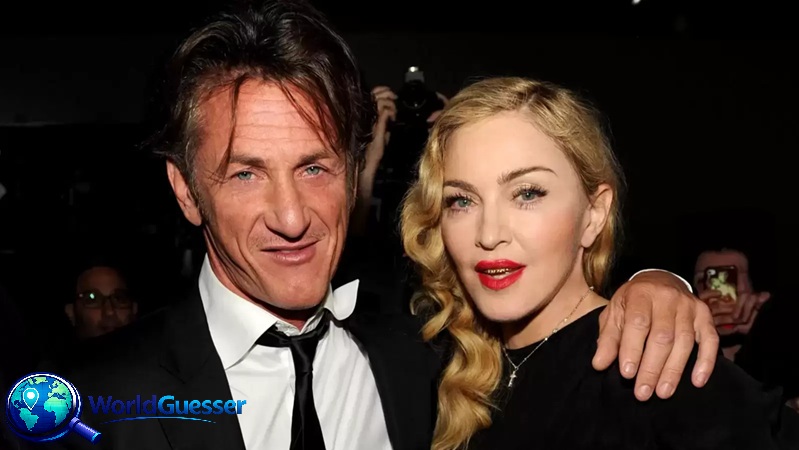
Sean Penn and Madonna
Sean Penn and Madonna married on August 16, 1985 at a Malibu estate — a ceremony that photographers attempted to document by helicopter, which established immediately the specific character of a marriage that would generate more press coverage than either party desired and more conflict than the specific combination of two extraordinarily strong-willed, extraordinarily famous young people in the most scrutinised decade of celebrity culture could easily sustain.
The assault charges accumulated with a frequency that reflected the specific volatility of the period. In October 1985 — two months after the wedding — Penn was charged with assault in Nashville after an altercation with two photographers who were attempting to film the couple. He pled no contest. In January 1986, charges were filed related to an alleged assault on a journalist. In April 1987, he was sentenced to sixty days in jail after an assault charge on a film set; he served thirty-three days.
The marriage’s public dimension — the paparazzi, the assault charges, the specific combustibility of two people whose fame placed them under constant surveillance — obscured what the marriage actually contained, which neither party has fully disclosed. They divorced in September 1989. Madonna filed. The marriage had lasted four years and produced, in the specific cultural record of the 1980s, one of the most fully documented relationships in Hollywood history — and in the biographical record of both participants, a chapter that neither has described with particular nostalgia.
Shanghai Surprise (1986) — the film they made together during the marriage — is, by critical consensus, among the less successful ventures of either career.
Robin Wright and the Family That Endured
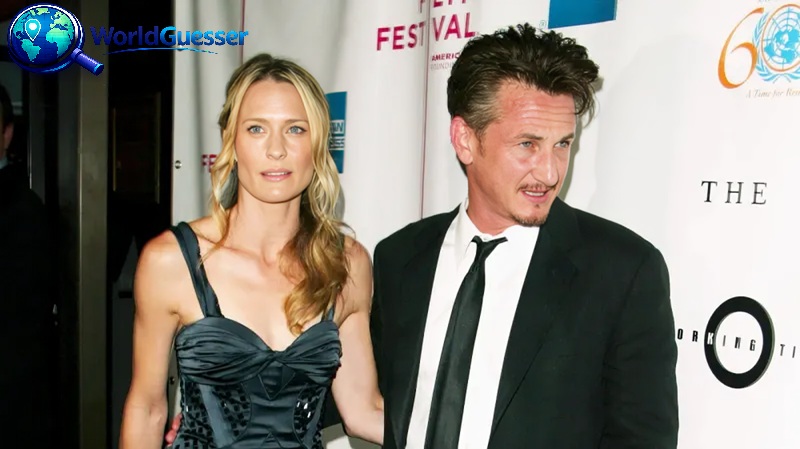
Sean Penn and Robin Wright
If the Madonna marriage was the relationship that generated its own news cycle, the relationship with Robin Wright was the one that generated two children who are both now working actors and the specific sustained complexity of a couple who separated, reconciled, separated again, and eventually divorced while maintaining the co-parenting relationship that their children’s wellbeing required.
Penn met Wright during the production of She’s So Lovely — Nick Cassavetes’s film, written by Nick’s father John Cassavetes before his death, in which Penn played a troubled man whose love for his wife is genuine and destructive simultaneously.
Their daughter Dylan Frances Penn was born on April 13, 1991 — before the marriage, which was formalised on April 27, 1996. Their son Hopper Jack Penn was born on August 6, 1993. The family’s public life was shaped by the specific difficulty of two people whose professional demands, personal volatility, and the accumulated weight of multiple separations made sustained domestic stability genuinely difficult.
The divorce was finalised in 2010 — after years of on-off separation whose specific timeline multiple sources document differently, reflecting the complexity of a situation that neither party simplified by making straightforward statements about it. What the two decades of their relationship produced, beyond Dylan and Hopper, was a co-parenting dynamic whose quality the children’s subsequent careers — both choosing the same profession their parents inhabit — reflects without appearing to have damaged.
Dylan Penn appeared alongside her father in Flag Day (2021) — the film Penn directed about master forger John Vogel, in which Dylan plays the daughter who loves and is betrayed by a father whose charm and criminality are inseparable. The casting was not a stunt. Dylan’s performance was reviewed as genuinely accomplished, and the specific resonance of a father and daughter playing a father and daughter whose relationship contains love and damage is the kind of artistic choice that only works when the performances are real enough to sustain the biographical weight.
Hopper Jack Penn has built his own acting career across multiple projects, whose quality reflects the formation of two serious actors as parents and whatever he has made of that formation on his own terms.
Dead Man Walking, Cannes, and the First Oscar Nomination
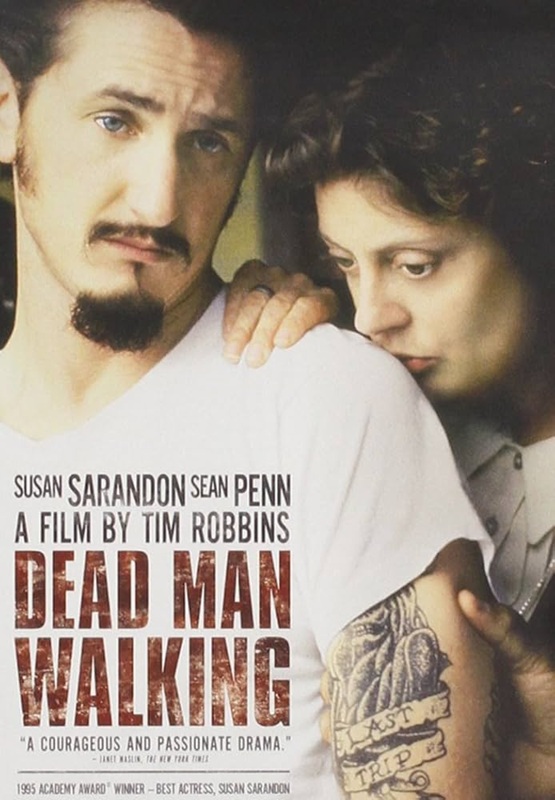
sean penn Dead Man Walking
Dead Man Walking (1995) — Tim Robbins’s adaptation of Sister Helen Prejean’s memoir — cast Penn as Matthew Poncelet: a death row inmate convicted of rape and murder whose spiritual journey toward execution and its attendant moral questions forms the film’s central dramatic territory. The performance required the specific technical capacity for making a character whose crimes are not minimised nonetheless comprehensible as a human being — the specific moral intelligence that the best dramatic acting demands and that lesser performances substitute with either sentimentality or condemnation.
He received his first Academy Award nomination for Best Actor — did not attend the ceremony — and won the Silver Bear for Best Actor at the Berlin International Film Festival. Two years later, She’s So Lovely (1997) earned him the Cannes Best Actor Award — the Palme d’Or’s acting equivalent at the festival whose specific prestige, within the international art cinema world, is the equal of the Oscar’s commercial prestige.
Sweet and Lowdown and I Am Sam: The Near-Misses
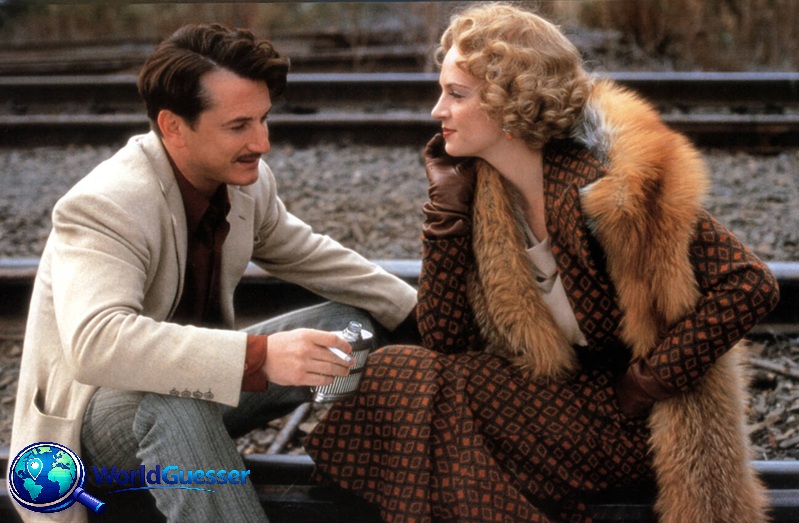
Sweet and Lowdown 1999
Sweet and Lowdown (1999) — Woody Allen’s faux-documentary about fictional jazz guitarist Emmett Ray, whose genius and selfishness are documented with the specific affection that Allen reserves for characters whose flaws are inseparable from their gifts — earned Penn his second Oscar nomination. The character’s specific physicality — the guitar technique, the period mannerisms, the particular combination of arrogance and vulnerability — demonstrated the character research and physical precision that his Method training consistently produced.
I Am Sam (2001) — in which he played Sam Dawson, a father with intellectual disabilities fighting for custody of his daughter — earned him his third Oscar nomination and the specific criticism that accompanies actors who play disability without the disability community’s full endorsement of how it was handled. The nomination was genuine; the controversy was also genuine; the film sat uncomfortably between its commercial ambitions and the specific complexity of the subject it was treating.
Mystic River: The First Win
Mystic River (2003) — Clint Eastwood’s adaptation of Dennis Lehane’s Boston crime novel — cast Penn as Jimmy Markum: a former convict turned legitimate businessman whose daughter is murdered, whose grief transforms into the specific violence of someone who has always known that the world he grew up in resolves problems through force, and whose terrible mistake in the film’s final act reflects the specific cost of that knowledge.
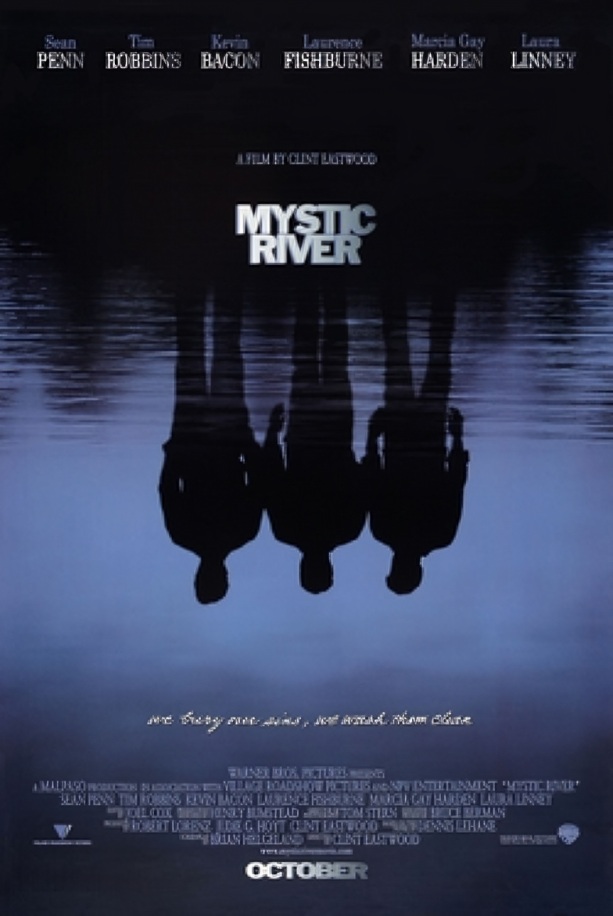
Mystic River
The performance is the most complete demonstration of what Sean Penn can do in a drama whose moral weight requires an actor capable of inhabiting genuine tragedy without sentimentalising it. Jimmy Markum is not a sympathetic character in any conventional sense. He is a man whose love for his daughter is absolute and whose response to her death is wrong, and Sean Penn plays both facts simultaneously without resolving the tension between them into something easier to watch.
He won the Academy Award for Best Actor — accepting with a speech whose specific combination of political directness and genuine gratitude reflected the character of a man who had been nominated three times before and was not about to pretend the occasion was anything other than what it was. He also won the Golden Globe, the SAG Award, and the specific critical consensus that this was the performance of the year.
Milk: The Second Win
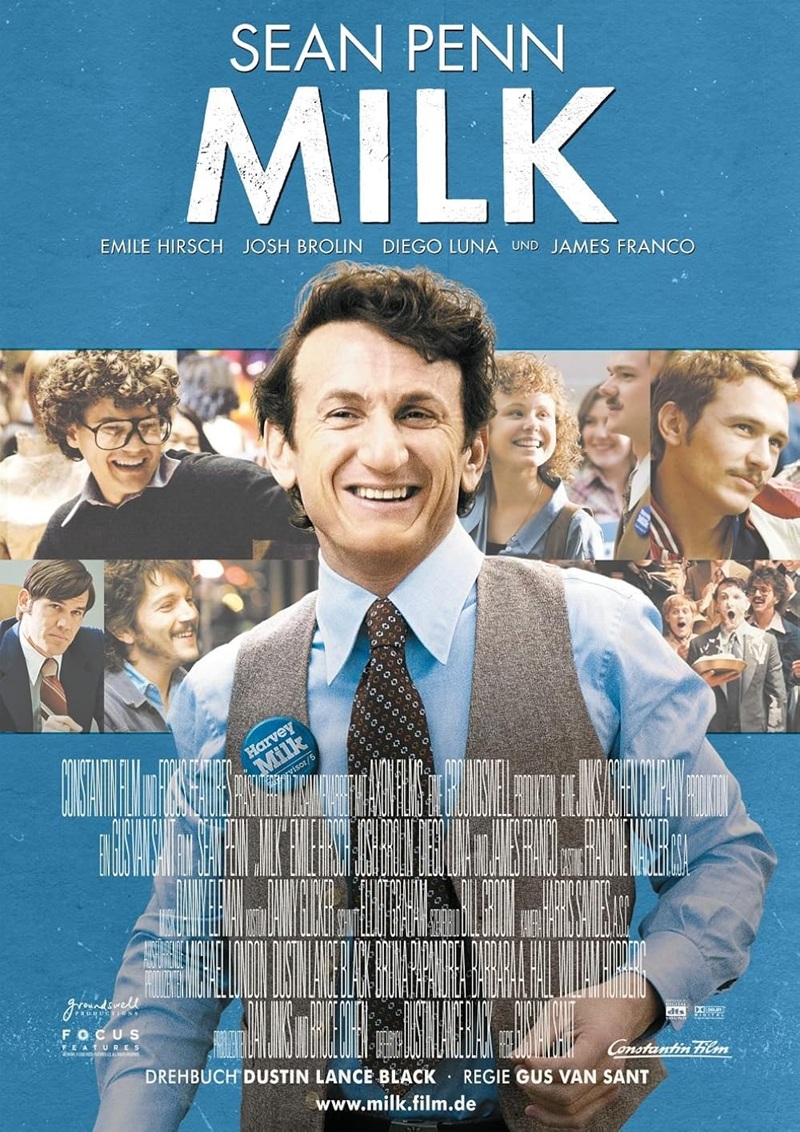
Milk 2008
Milk (2008) — Gus Van Sant’s biography of Harvey Milk, the San Francisco camera shop owner who became the first openly gay elected official in California history and was assassinated in 1978 — required Penn to do something that the Method training and the career of physical and emotional transformation had prepared him for and that the specific cultural moment in 2008 gave additional weight: play a gay man whose political courage and personal warmth made him one of the most beloved figures in the history of American civil rights, with sufficient accuracy and humanity to honour both the history and the man.
The preparation was specific: Penn studied Milk’s mannerisms, his vocal patterns, his physical presence, the specific combination of theatrical charm and genuine sincerity that had made him effective as a politician. He worked with members of San Francisco’s Castro District community who had known Milk personally. He carried the performance across a narrative that moves from New York to San Francisco, from anonymity to assassination, without ever losing the specific aliveness that the character required.
He won his second Academy Award for Best Actor — the specific distinction of joining a very small group of performers who have won the award twice — alongside the Critics’ Choice Award, the SAG Award, and the specific historical recognition of a performance that was, at the time of the film’s release in November 2008 during the same election cycle that passed Proposition 8 banning same-sex marriage in California, as politically charged as any acting performance of the decade.
Into the Wild and the Director’s Eye
Into the Wild (2007) — Penn’s adaptation of Jon Krakauer’s account of Chris McCandless, the twenty-four-year-old who gave away his savings, abandoned his car, hitchhiked to Alaska, and died alone in an abandoned bus in the wilderness — is the film whose specific combination of visual ambition, narrative patience, and the specific quality of Eddie Vedder’s original soundtrack demonstrated that Penn’s directorial voice was not merely competent but genuinely personal.
The film’s specific argument — that McCandless’s journey, however it ended, was the expression of something true about the American desire for freedom from the accumulation of possessions and social obligation — is presented without the sentimentality that the subject matter invites and without the condemnation that McCandless’s death makes available. Penn directed Emile Hirsch to the most important performance of the younger actor’s career, received a DGA Award nomination for Outstanding Directing, and made a film that has sustained a devoted audience across nearly two decades.
Flag Day (2021) — the film he directed and starred in alongside Dylan — continued the directorial career with a project whose personal dimension was inseparable from its professional one: a story about the complex love between a father whose gifts and failures are equally outsized, directed by a father whose own complex legacy his daughter was enacting on screen beside him.
CORE Response: Haiti, Katrina, and the Humanitarian Identity
The most significant dimension of Sean Penn’s public identity that his acting career does not encompass is the sustained humanitarian work that he has conducted, with the specific directness of someone who does not understand the distinction between acknowledging a problem and doing something about it, across more than two decades.
Hurricane Katrina (2005) — Penn arrived in New Orleans with a boat and personally participated in rescuing residents from flooded neighbourhoods, photographed doing the work rather than posing beside it. The image of Sean Penn paddling through floodwater was simultaneously mocked (the boat had a hole; he was bailing it with a plastic cup) and recognised as the specific character statement of someone who had decided that showing up mattered more than showing up correctly.
Haiti (2010) — following the January 12 earthquake that killed an estimated 100,000–300,000 people and displaced 1.5 million, Penn co-founded what became CORE Response (originally the J/P Haitian Relief Organization) with Ann Lee. He spent months in Haiti — not visiting, but working: managing logistics, coordinating with the Haitian government, overseeing camp administration, and doing the sustained unglamorous work of disaster relief that press coverage cannot sustain and that requires the kind of institutional commitment that most celebrity advocacy stops short of.
Ukraine (2022–present) is the most recent and most politically charged dimension of the humanitarian work. Penn was among the first documented filmmakers in Ukraine following Russia’s invasion in February 2022, making the documentary Superpower (2023) — which premiered at the Berlin International Film Festival and followed his evolving relationship with Zelenskyy and his understanding of the war’s character and stakes.
He gave one of his two Oscar statuettes to Zelenskyy as a symbol of solidarity — the specific gesture of someone who understands that symbols matter when the things they represent are at risk. He publicly offered to melt his Oscars into bullets for the Ukrainian war effort — a statement whose specific combination of symbolic force and practical absurdity is exactly the kind of thing that Sean Penn says with complete sincerity.
On the night of March 15, 2026, while Kieran Culkin was accepting his third Oscar in Hollywood, Sean Penn was in Ukraine.
The El Chapo Interview and Its Long Aftermath
In January 2016, Rolling Stone published Sean Penn’s account of his clandestine meeting with Joaquín “El Chapo” Guzmán — the Sinaloa Cartel leader who had escaped from a Mexican maximum security prison the previous July through a tunnel built by his organisation. The meeting had been arranged through Mexican actress Kate del Castillo, whose own relationship with Guzmán was the subject of significant subsequent scrutiny.
The article’s publication coincided almost precisely with the Mexican government’s recapture of Guzmán, generating immediate speculation about the role the Rolling Stone article and the communications surrounding it had played in leading authorities to Guzmán’s location. Penn faced intense criticism both for the meeting’s ethics and for the article’s literary style, which several reviewers described as self-aggrandising.
In October 2025 — nearly a decade after the article’s publication — del Castillo gave a public interview in which she called Penn “scum” and accused him of having used her as “bait” without informing her that he intended to write a published article about the meeting. The accusation renewed public attention to an episode that Penn had not, in the intervening years, discussed with the candour that the controversy had seemed to require.
One Battle After Another and the Third Oscar
One Battle After Another (2025) — Paul Thomas Anderson’s adaptation of Thomas Pynchon’s Vineland (1990), the novel whose specific paranoid California mythology and conspiratorial political landscape had been considered unfilmable for three decades — assembled one of the most significant casts of the decade: Leonardo DiCaprio, Sean Penn, Benicio del Toro, Regina Hall, Teyana Taylor, and Chase Infiniti.
Penn played Col. Steven J. Lockjaw — a calculating strategist whose specific role in the film’s labyrinthine narrative required the combination of physical authority and moral ambiguity that his career had been building toward across four decades. IndieWire’s reviewer noted that Penn “flexes his muscles, grits his teeth, and growls his lines, but somehow threads the needle between truth and caricature” — the specific critical formulation for a performance that is operating at the edge of what is permissible and staying on the right side.
The film grossed $209.7 million worldwide against a $130–175 million budget and won six Academy Awards at the 98th ceremony on March 15, 2026, including Best Picture and Best Director for Paul Thomas Anderson. Penn’s Best Supporting Actor win was the evening’s most discussed individual award — not for what it represented artistically but for the circumstances of its delivery.
Kieran Culkin’s acceptance speech was, by the following morning’s media consensus, the ceremony’s defining moment. The photograph of Zelenskyy and Penn that appeared the next day gave it its context.
Penn is currently in pre-production on the Untitled Jamal Khashoggi Project — his directorial account of the Saudi journalist’s 2018 assassination, whose specific combination of political subject matter and Penn’s humanitarian identity makes it the natural continuation of the career’s documentary and activist dimensions.
Charlize Theron, Leila George, and the Personal Record
The post-Robin Wright personal life has been, by the specific standard of Sean Penn’s previous relationships, considerably quieter if not considerably simpler. His relationship with Charlize Theron (2013–2015) — documented by the engagement ring she wore in 2015 and the absence of explanation for its subsequent disappearance — ended without the public accounting that either party apparently felt was owed.
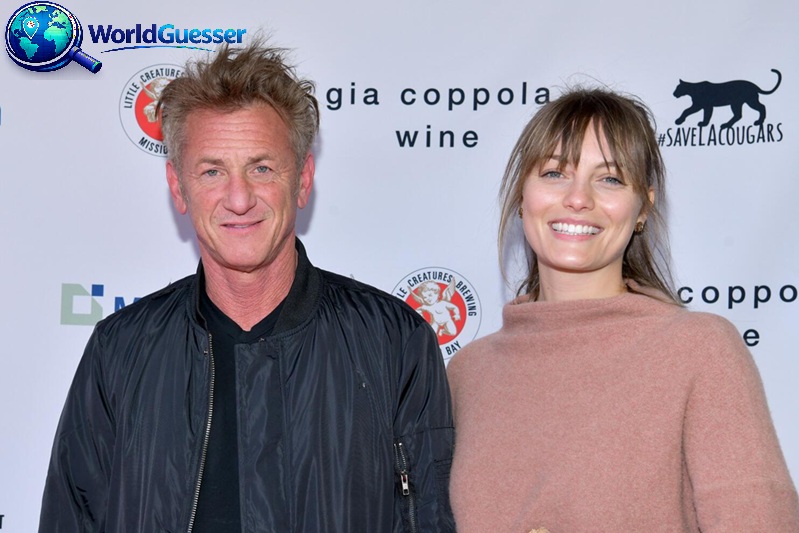
Sean Penn and Leila George
His marriage to Leila George — the daughter of actors Vincent D’Onofrio and Greta Scacchi — on July 30, 2020, during the COVID-19 pandemic, produced what Penn described at the time as the specific rightness of a private ceremony during a period when public ceremonies were impossible. Leila George filed for divorce on October 15, 2021 — fifteen months after the wedding. The divorce was finalised on April 22, 2022.
A relationship with Ukrainian Olga Korotyayeva that began in June 2023 was confirmed as having ended when Penn told an interviewer in June 2024 that he was single. He is, as of March 2026, sixty-five years old, apparently single, and in Ukraine.
Net Worth and the Forty-Five Year Accounting
| Income Source | Estimated Contribution |
|---|---|
| Acting career (1981–2026) — 45 years, hundreds of credits | Primary cumulative income |
| Fast Times through Mystic River — star salary peak | $5–15M per major film at peak |
| Milk, The Tree of Life, recent prestige work | Prestige drama fees |
| Directing — Into the Wild, Flag Day, Superpower | Directing fees + backend |
| Producing credits across multiple projects | Additional income |
| Bob Honey Who Just Do Stuff (novel, 2018) | Modest |
| California real estate — Malibu, Pacific Palisades | Significant asset appreciation |
| CORE Response | Charitable non-income; personal investment |
| Estimated Total Net Worth (2026) | $70 million |
Conclusion
Sean Penn was born in Santa Monica on August 17, 1960, the son of a blacklisted Hollywood director and a Catholic actress from New Jersey, raised in Malibu, trained in Method acting at the Lee Strasberg Institute, cast as a stoned surfer at twenty-one, arrested multiple times in his twenties, married Madonna and divorced her, made Dead Man Walking and wasn’t there for the nomination, won Cannes for She’s So Lovely, won his first Oscar for Mystic River in 2004, won his second for Milk in 2009, went to Haiti after the earthquake and stayed, went to Ukraine after the invasion and stayed, gave Zelenskyy one of his Oscars, offered to melt the other one into bullets, made a documentary about Zelenskyy that premiered at Berlin, appeared in Paul Thomas Anderson’s adaptation of Thomas Pynchon’s unfilmable novel, played Col. Steven J. Lockjaw with the gritted teeth and threaded needle that IndieWire noted, won his third Academy Award on March 15, 2026, was not in the room, was in Ukraine, had Kieran Culkin accept for him with the line that the internet remembered the next morning, and had Zelenskyy post the photograph.
He is sixty-five years old. He is the eighth actor in history to win three performance Oscars. He is currently directing a film about Jamal Khashoggi. He has not confirmed where he will be when that one premieres.
FAQs
1. How many Oscars does Sean Penn have? Sean Penn has three Academy Awards — Best Actor for Mystic River (2004), Best Actor for Milk (2009), and Best Supporting Actor for One Battle After Another at the 98th Oscars on March 15, 2026. He is the eighth actor in history to win three performance Oscars.
2. What did Sean Penn win at the 2026 Oscars? At the 98th Academy Awards on March 15, 2026, Sean Penn won Best Supporting Actor for his role as Col. Steven J. Lockjaw in Paul Thomas Anderson’s One Battle After Another. He did not attend the ceremony; Kieran Culkin accepted on his behalf.
3. Who are Sean Penn’s children? Sean Penn has two children with Robin Wright: Dylan Frances Penn (b. April 13, 1991) — an actress and model who co-starred with her father in Flag Day (2021) — and Hopper Jack Penn (b. August 6, 1993) — an actor.
4. Who was Sean Penn married to? Sean Penn has been married three times: to Madonna (1985–1989), to Robin Wright (1996–2010), and to Leila George (2020–2022). He also had a notable relationship with Charlize Theron (2013–2015).
5. What is Sean Penn doing in Ukraine? Sean Penn has been a consistent presence in Ukraine since Russia’s invasion in February 2022. He co-directed the documentary Superpower (2023) about President Zelenskyy and the war. He gave one of his Oscar statuettes to Zelenskyy as a symbol of support. He was reportedly in Ukraine on the night of March 15, 2026, when he won his third Oscar.
6. What is Sean Penn’s net worth in 2026? Sean Penn’s estimated net worth in 2026 is approximately $70 million, accumulated across a forty-five-year acting and directing career, real estate holdings in California, and producing credits across multiple projects.