
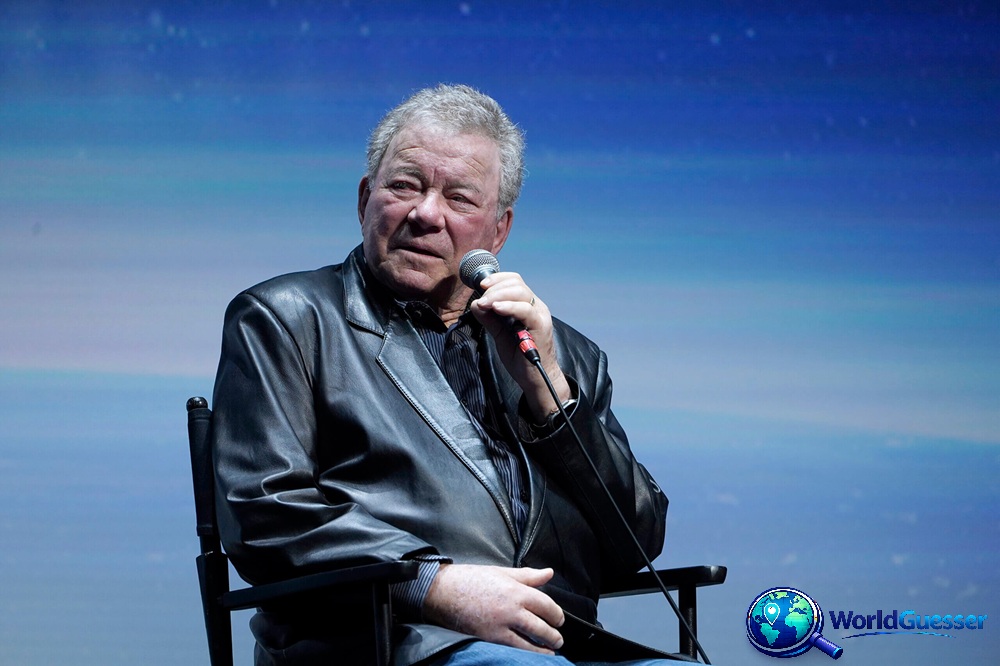
Who Is William Shatner
William Shatner is a Canadian actor, author, director, and recording artist born on March 22, 1931 in Montreal, Quebec, who turns 95 in March 2026. In a career spanning more than seven decades, he has become one of the most recognisable performers in the history of American television — a cultural icon whose portrayal of Captain James T. Kirk in Star Trek: The Original Series from 1966 to 1969 generated a franchise that has now lasted nearly sixty years and shows no signs of conclusion. He won two Emmy Awards and a Golden Globe for his later role as attorney Denny Crane in Boston Legal, became the oldest person to fly to space at the age of ninety, survived stage 4 melanoma, and has written thirty books, recorded eight albums, and hosted multiple television series between acting engagements.
He is also 95 years old in three days, recovering from shoulder surgery sustained during a horseback riding session, and has just reconciled with his fourth wife Elizabeth Martin following a divorce that was finalised in 2020. The story of William Shatner is, at its core, the story of a man who has treated longevity not as a condition to be managed but as an invitation to keep going — and who has, across nine decades, found reasons to accept that invitation with remarkable consistency.
| Detail | Information |
|---|---|
| Full Name | William Alan Shatner OC |
| Born | March 22, 1931, Notre-Dame-de-Grâce, Montreal, Quebec, Canada |
| Nationality | Canadian (US resident, green card holder) |
| Age | 94 (turns 95 on March 22, 2026) |
| Ancestry | Jewish — Ukrainian and Lithuanian immigrant family |
| Education | Willingdon Elementary; West Hill High; Baron Byng High School; McGill University (BCom, 1952) |
| Occupation | Actor, director, author, producer, recording artist |
| Years Active | 1951–present (74 years) |
| Breakout Role | Captain James T. Kirk — Star Trek: The Original Series (1966–1969) |
| Most Acclaimed Role | Denny Crane — The Practice / Boston Legal (2003–2008) |
| Emmy Awards | 2 — Outstanding Guest Actor Drama (2004); Outstanding Supporting Actor Drama (2005) |
| Golden Globe | 1 — Best Supporting Actor, Series (2005) |
| Other Honours | Officer of the Order of Canada (2017); Saturn Lifetime Achievement Award (2025); TV Hall of Fame (2006) |
| Space Flight | Blue Origin NS-18 — October 13, 2021 (age 90) — oldest person to fly to space |
| Books Written | 30+ including Star Trek Memories, Up Till Now, Live Long And… |
| Albums Released | 8 including The Transformed Man (1968), Has Been (2004), Bill (2021) |
| Marriages | Gloria Rand (1956–1969); Marcy Lafferty (1973–1996); Nerine Kidd (1997–1999, died); Elizabeth Martin (2001–2020 divorced; reconciled 2025) |
| Children | Leslie (b. 1958), Lisabeth (b. 1961), Melanie (b. 1964) — all with Gloria Rand |
| Health | Stage 4 melanoma (treated 2023–24); blood sugar hospitalisation September 2025; shoulder surgery early 2026; currently recovered |
| Residence | Los Angeles, California |
Montreal, the McGill Commerce Degree He Barely Cared About, and a Deal With His Father
William Shatner was born into a Conservative Jewish household in the Notre-Dame-de-Grâce neighbourhood of Montreal, the middle of three children born to Joseph Shatner — a clothing manufacturer whose family had emigrated from Ukraine and whose grandfather, Wolf Schattner, had anglicised the family name on arrival — and Ann Garmaise, whose parents had come from Lithuania. He has two sisters: Joy Rutenberg, who was born in 1928 and died in 2023, and Farla Cohen, born in 1940.
He discovered acting at summer camp in 1937, at the age of six, and by eight was enrolled in the Montreal Children’s Theatre, where he played Tom Sawyer as his first stage role and went on to perform for five years. From age ten to thirteen he appeared regularly on the Montreal Radio Fairytale Theater on the CBC. He was also, by his own account, a competitive teenager: at West Hill High School, where he was frequently the only Jewish student and dealt with antisemitic harassment, he earned the nickname “Toughy” by winning most of the fights that resulted from it. He played football, wrestled, and skied.

His father disapproved of acting as a career and insisted on a business education. The two struck a deal: if William could not make a living as an actor within five years of graduation, he would return to Montreal and join the family clothing business. Shatner enrolled at McGill University’s Faculty of Management, studied economics with minimal enthusiasm and maximum extracurricular theatrical involvement, and graduated with a Bachelor of Commerce degree in 1952. He honoured the deal by never going back. His first post-graduation job was as assistant manager at the Mountain Playhouse in Montreal — he reportedly told the producer he was a business graduate as justification for the administrative role, while his real purpose was to be near the stage.
Stratford, Broadway, and the Decade Before Kirk
In 1954 Shatner joined the Stratford Shakespeare Festival in Stratford, Ontario — one of the most prestigious theatre companies in North America — where he worked under director Sir Tyrone Guthrie. Guthrie rated him extremely highly, later describing him as the most promising actor the Festival had employed. Over three years at Stratford he played more than a hundred roles in over sixty productions, covering Shakespeare, Sophocles, and Christopher Marlowe. His big break within the company came when Christopher Plummer was hospitalised on three hours’ notice and Shatner stepped in as Henry V — a moment that confirmed both his preparation and his nerve.
In 1956 he made his Broadway debut in Guthrie’s production of Tamburlaine the Great and moved to New York, spending the following decade alternating between Broadway and live television. His television appearances in the late 1950s and early 1960s included memorable guest performances in The Twilight Zone — his dual episodes “Nightmare at 20,000 Feet” and “Nick of Time” are regularly cited among the series’ most effective — as well as appearances in Alfred Hitchcock Presents, The Defenders, and Playhouse 90.
His film debut in a significant production came with The Brothers Karamazov (1958) alongside Yul Brynner, followed by Judgment at Nuremberg (1961) and Roger Corman’s The Intruder (1962), in which he played a white supremacist opposing school desegregation in the American South — a role that required real physical courage, as the production filmed in actual Missouri towns with hostile local populations. He turned down the role of Dr. Kildare, which became a major success for Richard Chamberlain. He failed to secure regular series roles in an adaptation of the Nero Wolfe mysteries and the legal drama For the People. On the eve of his casting in Star Trek in 1965, he was, by the New York Times writer Pat Jordan’s assessment, seen simply as an actor who showed up on time, knew his lines, worked cheap, and always answered his phone.
Star Trek: The Role That Defined and Nearly Imprisoned Him
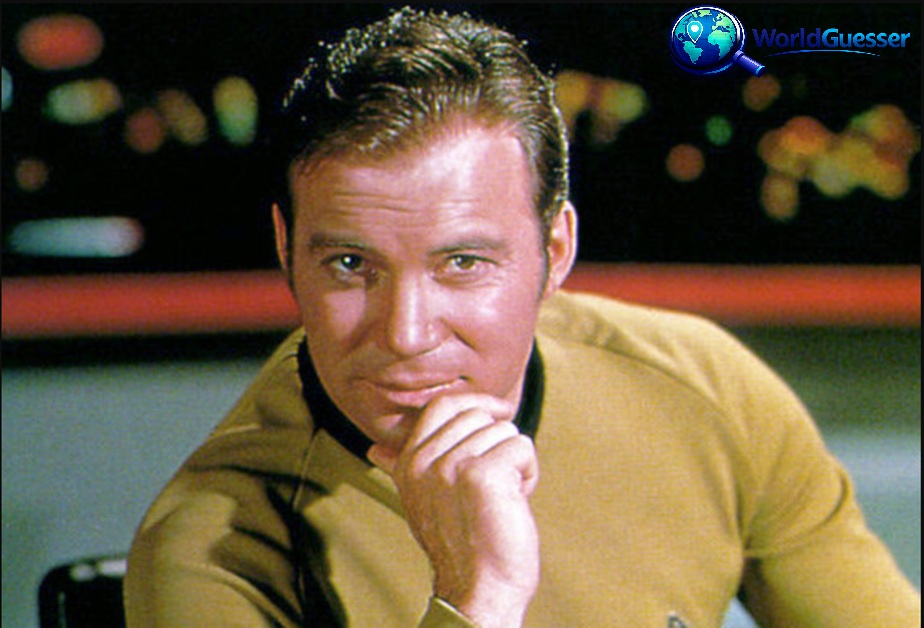
Star Trek
Star Trek: The Original Series premiered on NBC on September 8, 1966, with Shatner as Captain James Tiberius Kirk of the starship USS Enterprise. Created by Gene Roddenberry, the show placed Kirk — a decisive, physically brave, intellectually engaged commander prone to making his own rules in pursuit of the right outcome — at the centre of a vision of humanity’s future that was deliberately optimistic and pointedly integrated. The original cast included Leonard Nimoy as the half-human, half-Vulcan Spock, DeForest Kelley as Dr. Leonard McCoy, George Takei, Nichelle Nichols, James Doohan, and Walter Koenig.
The show was cancelled by NBC after three seasons in 1969 — a decision made on ratings grounds that the network would spend the following decade regretting. In syndication, Star Trek became exponentially more popular than it had been in its original run. A fan letter-writing campaign had already saved it from cancellation after its second season; the same passionate audience sustained it through syndication and into the cultural mainstream throughout the 1970s. By the time Paramount commissioned Star Trek: The Motion Picture in 1979, the franchise had become too large and too commercially significant to remain cancelled.
Shatner appeared in the first seven Star Trek feature films, from The Motion Picture (1979) through Star Trek Generations (1994), in which Kirk was killed — a death Shatner has since discussed extensively, including his own proposals for how it could be narratively reversed via de-aging technology. He also directed Star Trek V: The Final Frontier (1989) — the only film in the franchise he has screened in full, since he was obliged to watch it during editing.
The relationship between Shatner and his Star Trek co-star Leonard Nimoy is one of the more complex professional friendships in American entertainment. They first appeared on screen together in 1964, a year before Star Trek, in an episode of The Man from U.N.C.L.E. Their characters’ contrasting natures — Kirk’s impulsiveness against Spock’s logic — reflected a real creative tension between the two actors, which developed over decades into genuine close friendship. In 2016 Shatner revealed that despite their long and affectionate relationship, he and Nimoy had not spoken to each other in the five years before Nimoy’s death in February 2015 — a disclosure that generated significant emotional response from fans and from Shatner himself.
Key Career Credits
| Title | Years | Role | Network / Medium |
|---|---|---|---|
| Star Trek: The Original Series | 1966–1969 | Captain James T. Kirk | NBC |
| Star Trek films I–VII | 1979–1994 | Captain James T. Kirk | Paramount |
| T.J. Hooker | 1982–1986 | Sgt. T.J. Hooker | ABC / CBS |
| Rescue 911 | 1989–1996 | Host | CBS |
| 3rd Rock from the Sun | 1997–2001 | The Big Giant Head | NBC |
| Miss Congeniality | 2000 | Stan Fields | Film |
| The Practice | 2003–2004 | Denny Crane | ABC |
| Boston Legal | 2004–2008 | Denny Crane | ABC |
| $#*! My Dad Says | 2010–2011 | Ed Goodson | CBS |
| Better Late Than Never | 2016–2018 | Himself | NBC |
| The UnXplained | 2019–2023 | Host | History |
| You Can Call Me Bill | 2024 | Subject | Documentary |
The Lean Years, the Truck Camper, and the Professional Reinvention
After Star Trek was cancelled in 1969, Shatner faced an acute professional and personal crisis simultaneously. His first wife Gloria Rand left him and, according to his own account, took a substantial portion of their finances with her. With limited acting work and limited money, he spent a period living in a pick-up truck camper while working wherever he could find work — summer stock, television guest spots, whatever was available. The image of the future face of one of the most successful franchises in entertainment history sleeping in a truck camper is one of the better-known pieces of Hollywood biography, and Shatner has revisited it frequently with a lack of self-pity that says something about his fundamental character.
He rebuilt steadily through the 1970s — T.J. Hooker (1982–1986) gave him a second successful series run, and the steady stream of Star Trek films from 1979 onward kept him in the public eye. But the role that genuinely revived his critical standing — and produced the awards recognition that Star Trek never had — was Denny Crane, the brilliantly eccentric attorney he played in the final season of David E. Kelley’s The Practice from 2003 and across the full run of its spinoff Boston Legal from 2004 to 2008. Crane was a showcase for Shatner’s comedic gifts in a register he had rarely been given space to explore — pompous, charming, intermittently confused, and genuinely funny in ways that depended entirely on the performance rather than the writing. He won the Emmy for Outstanding Guest Actor in a Drama Series in 2004 and the Emmy for Outstanding Supporting Actor in a Drama Series in 2005, along with the Golden Globe for Best Supporting Actor in a Series in 2005. The recognition was both overdue and genuine.
Recording, Writing, and the Transformed Man
Shatner’s parallel career as a recording artist began in 1968 with The Transformed Man — an album of spoken-word renderings of contemporary pop hits, including the Beatles’ “Lucy in the Sky with Diamonds” and Bob Dylan’s “Mr. Tambourine Man,” delivered with the dramatic earnestness that his Star Trek performances had made familiar. The album was widely mocked on its release and has since become a cult object, influencing a specific strain of eccentric celebrity recording that continues to generate interest.
His most critically received album was Has Been (2004), produced and arranged by Ben Folds, which featured original songs and collaborations with artists including Joe Jackson, Aimee Mann, Henry Rollins, and Brad Paisley. The album was praised for its self-awareness and genuine emotional content, and it reset expectations of what a William Shatner recording could be. Subsequent albums have included Seeking Major Tom (2011), The Blues (2020) with Brad Paisley, Bill (2021), and So Fragile, So Blue (2024) — a performance with Ben Folds, the National Symphony Orchestra, and conductor Steven Reineke at the Kennedy Center.
He has written more than thirty books across fiction and non-fiction: the TekWar science fiction series (conceptualised with co-writer Ron Goulart), the Star Trek memoirs (Star Trek Memories, 1993; Star Trek Movie Memories, 1994), the autobiography Up Till Now (2008), and the longevity memoir Live Long And…: What I Learned Along the Way. The McGill University Centre in Montreal is named after him — an unusual honour for a man who earned a BCom there while paying as little attention to his commerce studies as possible.
Horses, the Hollywood Charity Horse Show, and a Passion by Accident
Shatner’s involvement with horses began as an accident. At a horse auction he made what was interpreted as a bid — too embarrassed to reverse the gesture, he took the animal home. The accidental acquisition opened what he has described as the most happiness-producing chapter of his adult life. He became an accomplished equestrian in American Saddlebreds, breeding and showing horses at a level that produced a world championship — he won the Amateur Roadster to Bike Championship at the Kentucky State Fair in 2019, at the age of 88. He goes for two or three hour rides on his days off and credits the physical and psychological demands of riding as the core of his fitness regime. His 95th birthday celebration was preceded by shoulder surgery required after an injury sustained during a horseback riding session — an injury that, at any other age, would lead to the suggestion that perhaps the riding should stop. At 95, it appears to have led to surgery and recovery.
In 1990 he founded the Hollywood Charity Horse Show, an annual equestrian event in Los Angeles that raises funds for children’s charities. The show has raised millions of dollars across its thirty-plus-year run and remains active.
Space, the Final Frontier — At 90
On October 13, 2021, William Shatner flew to space aboard Blue Origin’s New Shepard rocket — the NS-18 mission — becoming at age 90 the oldest human being to have flown to space. The mission lasted approximately eleven minutes, reaching an altitude of approximately 66 miles above Earth’s surface before the capsule descended by parachute to a landing in the Texas desert. Jeff Bezos was at the landing zone to greet the crew.
Shatner’s account of the experience, delivered in tears immediately after the flight, was one of the more discussed pieces of public communication about space that year. He described looking out the window and seeing the blackness of space — the profound, empty darkness — and realising that what you feel looking at it is not wonder but grief. The Earth below him was life; the darkness above was death; and the thin blue line of the atmosphere was the only thing keeping everything alive. He described it as the most moving experience of his life and expressed frustration that he could not make other people feel what he had felt. The speech was unscripted, delivered in tears, and has since been cited as one of the most genuine accounts of the overview effect — the cognitive shift that astronauts describe when seeing Earth from space — ever given.
His record was surpassed on May 19, 2024, when retired US Air Force pilot Ed Dwight — 48 days older than Shatner — flew on Blue Origin NS-25 at the age of 90 years and 253 days.
Four Marriages, One Death, and a Reconciliation
Shatner has been married four times. His first wife was Canadian actress Gloria Rand — born Gloria Rabinowitz — whom he married on August 12, 1956. They had three daughters: Leslie, born 1958; Lisabeth, born 1961; and Melanie, born 1964. The marriage ended in divorce in March 1969, partly in the aftermath of Star Trek‘s cancellation and the financial and personal upheaval that followed.
In 1973 he married actress Marcy Lafferty, who had starred as Maggie in his Los Angeles staging of Cat on a Hot Tin Roof. They separated in 1994 and divorced in 1996. There were no children from this marriage.
In 1997 he married Nerine Kidd, an actress he had known since the early 1990s. On August 9, 1999, Shatner returned home to find Kidd at the bottom of their swimming pool in Studio City, California. She had drowned; the coroner’s report found that she had acute alcohol intoxication combined with Valium in her system at the time of death. She was 40 years old. Shatner has spoken about the death, the grief, and the guilt of not having been able to prevent it on multiple occasions in the decades since — it is among the most difficult and defining experiences of his personal life.
In 2001 he married Elizabeth Anderson Martin, a horse breeder. He filed for divorce in 2019; the divorce was finalised in January 2020. As of 2025, Shatner and Martin have reconciled and he is once again referring to her as his wife, a development that adds a quietly remarkable footnote to a personal history that has already contained more narrative turns than most.
Stage 4 Melanoma, Blood Sugar, Shoulder Surgery, and Still Going
In 2024, speaking at the annual meeting of the American Academy of Dermatology, Shatner disclosed that he had discovered a lump near his right ear that his family physician initially dismissed as a blocked parotid gland. After a month of massaging it produced no improvement, a second doctor examined it and immediately recommended removal. It was stage 4 melanoma. He had surgery and was subsequently treated with immunotherapy, which produced fatigue but cleared the cancer. He has since publicly encouraged early detection through dermatological examination.
In September 2025, at age 94, he was hospitalised in Los Angeles following what reports described as a blood sugar emergency. He responded on social media the following day with characteristic economy, posting a meme of himself as Mark Twain with the quote “Rumors of my demise have been greatly exaggerated” and adding: “I over-indulged. I thank you all for caring but I’m perfectly fine. I keep telling you all: don’t trust tabloids or AI.” A Thanksgiving post weeks later showed him surrounded by family, describing himself as “blessed beyond measure with health.”
Early 2026 brought shoulder surgery following the horseback riding injury, from which he is currently recovered. On March 22, 2026, he turns 95.
In 2025 he received a Special Lifetime Achievement Saturn Award — recognition from the science fiction and fantasy community that, given what Star Trek has meant to that world across sixty years, arrived with particular resonance. He has also joined the oversight committee of Biotech Explorers, a longevity research startup aiming to extend human life expectancy to 130 years — a project whose ambitions he has called genuinely exciting for a self-described futurist who has already outlived most predictions about him.
A Life That Refused the Appropriate Ending
The central quality of William Shatner’s career and life is the same quality that Captain Kirk embodied on television for three seasons in the late 1960s: a refusal to accept that the situation is irrecoverable. Cancelled series, financial ruin, personal tragedy, professional stagnation, a decade in which the role that made him famous became the cage he could not escape — each of these was followed by something else. Two Emmy Awards. A space flight. Thirty books and eight albums. A horse championship at 88. A documentary at 93 and a Kennedy Center performance at 94. He is currently 94 years old, has just had shoulder surgery, is reconciled with his fourth wife, and turns 95 in three days. The appropriate ending, if such a thing were ever going to arrive, has not yet found the right moment to introduce itself.